Introduction
When you look at a live production from backstage, you quickly realize that an unforgettable night is engineered long before the house lights go down. Most attendees only see the headline artist on a polished banner, but the success of any gathering comes down to rigging, acoustic isolation, crowd throughput, and front-of-house management. Across the National Capital Region, a brilliant performance can be ruined by an echoey metal roof, an unventilated hall, or bottlenecks at the gate. Experiencing the capital’s entertainment scene like an industry professional means evaluating what happens around the stage, not just what is on it. By understanding how lighting trusses, sound boards, and security cordons operate, you can easily tell the difference between an overhyped showcase and a well-engineered production. Whether you are tracking down an intimate jazz session, an arena tour, or an interactive creative studio, using verified discovery hubs like DelhiOrbit allows you to bypass production mismatches and experience the best live events in Delhi.
The Technical Anatomy of Delhi’s Performance Spaces
From an event director’s viewpoint, the capital is divided into sharply contrasting venue typologies. An audio engineer mixes entirely differently for a wood-paneled hall in Central Delhi than for an open-air turf ground in Gurugram or an industrial warehouse in Okhla.
Central Delhi remains the gold standard for acoustic treatment and disciplined stagecraft. Venues designed for classical theater feature sloped rake seating, sound-dampening baffles, and dedicated fly towers for stage scenery. The technical infrastructure here supports unamplified dialogue and delicate classical instruments without unwanted feedback or reverberation.
South Delhi’s creative studio belts emphasize modular flexibility. These black-box studios and converted industrial hubs use direct lighting rigs and short throw distances. While these intimate setups give the audience an immediate connection to the artist, they offer limited backstage space and tight perimeter corridors, making early arrival crucial.
The massive open-air expanses along outer expressway corridors are engineered for heavy industrial scale. They host massive truss grids, delayed speaker stacks, and dedicated power generators. However, these colossal sites require extensive perimeter fencing and crowd channeling, meaning your personal experience depends directly on how well the organizer handles gate throughput.
Evaluating Event Categories by Technical Demands
Different live formats place distinct demands on both the production crew and the paying audience.
Live Music and Concerts in Delhi
Audio engineering at live music shows generally falls into two categories: high-output arena arrays and controlled acoustic environments. Intimate acoustic performances rely on balanced stage monitors and direct line-of-sight sound, giving you clean vocal separation and uncompressed dynamics.
When attending large-scale concerts in Delhi hosted on open exhibition grounds, the sound experience is heavily influenced by venue physics. Sound waves naturally lose punch across open lawns, which is why reputable producers install delay towers to carry audio clearly to the rear sections.
If you are standing too close to the main front-of-house line arrays, you risk muffled bass and harsh high frequencies. For the most balanced mix, seasoned concertgoers position themselves near the soundboard tent, where the audio engineer actively fine-tunes the performance.
Stand-Up Comedy Shows in Delhi
Comedy production depends almost entirely on vocal intelligibility and tight visual framing. A stand-up comic needs a focused spotlight, a responsive microphone, and an enclosed space where laughter can reverberate without escaping into high ceilings.
When booking tickets for comedy shows in Delhi, keep in mind that mid-sized auditoriums and comedy clubs enforce strict front-of-house rules.
Because comedy requires unbroken rhythm, ambient light leaks from opening doors or roving smartphone screens can ruin an entire punchline. Venue stage managers enforce hard door cutoffs the moment the host takes the mic, holding latecomers in the wings until the comic finishes their current bit.
Formal Stage Plays and Theatrical Productions
Theatrical staging in the capital relies on classical stage management traditions. Productions balance live mic cues, scenic set changes, and delicate spotlight programming to pull the audience into the narrative.
Because theater demands complete focus, auditorium managers enforce strict front-of-house protocol. Once the house lights fade and the third warning bell rings, the auditorium doors are locked. Photography is strictly prohibited to keep camera screens from breaking the stage illusion, creating an uninterrupted artistic environment.
Hands-On Workshops in Delhi
From an operational standpoint, a workshop functions like an interactive studio production. The mentor is not just presenting; they are actively managing attendee pacing, raw material distribution, and hands-on guidance across shared workstations.
Before signing up for workshops in Delhi, an experienced organizer looks at workstation setups.
A high-quality workshop restricts registration numbers so the host can offer personal feedback, provides dedicated tool kits for every attendee, and outlines a structured timeline that ensures you leave with a finished project rather than an incomplete trial.
Independent Fleas and Design Pop-Ups
Lifestyle bazaars and open-air design exhibitions function as multi-vendor, self-guided environments. Producers arrange these spaces with wide walkways, balanced ambient sound, and distributed electrical infrastructure to support food stalls, boutique displays, and acoustic stages simultaneously.
These events operate on flexible schedules. You are not bound by a rigid curtain time, allowing you to drop in whenever you like, browse curated stalls at your own pace, and engage directly with independent artisans throughout the day.
The Technical Director’s Venue Comparison Matrix
Before buying tickets, run your options through a practical comparison matrix that balances staging, acoustics, and crowd logistics.
| Gathering Style | Stage Architecture | Audio Profile | Primary Production Hurdle | Transit Strategy |
| Arena Concerts | Elevated truss grids | High SPL, delayed arrays | Gate security, token congestion | Metro is mandatory to avoid gridlock |
| Club & Studio Gigs | Low-rise platforms | Direct acoustic / PA | Limited capacity; sightlines | Ride-hailing cab directly to venue |
| Auditorium Comedy | Fixed proscenium | Vocal-focused PA | Strict door times; zero late entry | Metro to central hubs, then walk |
| Studio Classes | Open tables | Ambient natural sound | Material access, mentor time | Drive or direct auto-rickshaw |
| Theatrical Drama | Stepped proscenium | Natural acoustic shells | Absolute quiet; strict curtain calls | Violet or Blue Metro lines |
Keep these foundational staging factors in mind when making your selection:
- Audience Elevation: Multi-purpose banquet halls with flat floors create sightline problems beyond the first few rows. Spaces with stepped stadium seating or high stage platforms ensure an unobstructed view of the performance.
- Acoustic Treatment: Halls with exposed concrete, large glass panes, or metal ceilings cause sound to bounce and create harsh echoes. Dedicated auditoriums or acoustically baffled clubs deliver much cleaner sound.
- Exit Corridors: A venue located along a narrow access lane creates immediate vehicle bottlenecks when the crowd leaves. Choosing spaces with direct access to multi-lane main roads keeps your trip home smooth.
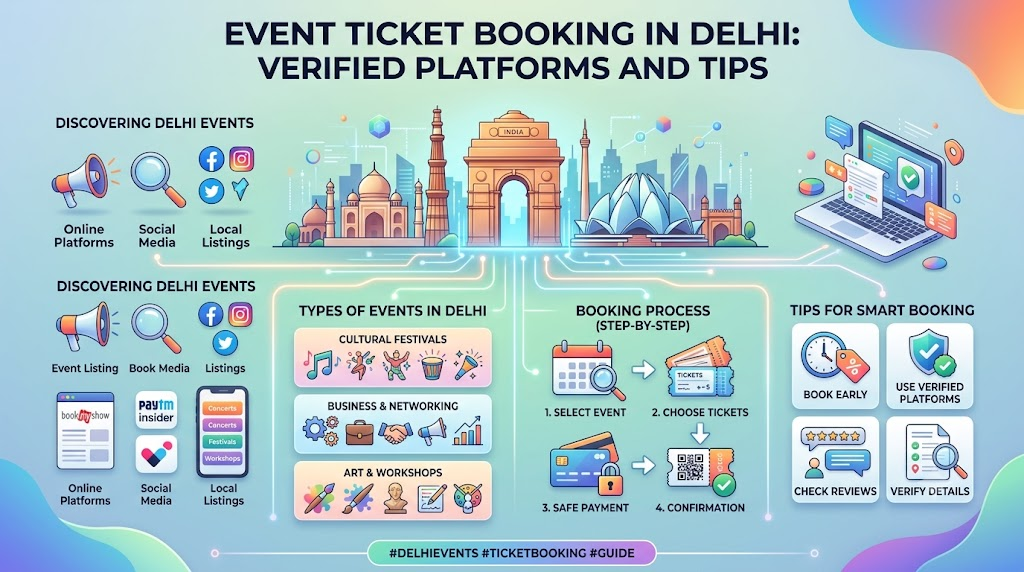
A Producer’s Six-Step Blueprint for Attending Events
Attending an event should feel inspiring, not like an endurance test. Applying a structured production blueprint helps you discover, evaluate, and enjoy gatherings without common operational hiccups.
Identify Production ➔ Audit Venue Infrastructure ➔ Parse Ticket Tiers ➔ Book Verified Passes ➔ Map Transit Routes ➔ Arrive Ready
Step 1: Discover and Screen Curated Productions
Start by filtering through verified options that match your preferred atmosphere, schedule, and neighborhood. Using a curated guide like DelhiOrbit spares you from dealing with fragmented flyers, incorrect door times, and unverified social media chatter.
Step 2: Audit Venue Layout and Accessibility
Look into the venue’s physical setup before purchasing passes. Confirm whether the event is held in a climate-controlled hall or on an open-air lawn vulnerable to seasonal weather shifts. If you are attending with older family members, check for step-free access, functioning elevators, and clear pathways.
Step 3: Parse Ticket Tiers Realistically
Look beyond marketing labels like “VIP Enclosure” or “Gold Access.” At a major music festival, a front-row VIP ticket might trap you right against the stage subwoofers at an extreme viewing angle, while an elevated general admission grandstand often provides better sightlines, balanced sound, and easier access to restrooms.
Step 4: Execute Event Ticket Booking in Delhi Securely
When carrying out event ticket booking in Delhi, make your purchases exclusively through authorized ticketing platforms. Verify the calendar date, venue address, and curtain time before confirming payment. Remember that live entertainment passes are strictly non-refundable unless the organizers cancel the show outright.
Step 5: Coordinate Transit Around Rush Hours
Factor in regional traffic corridors, especially along major ring roads on Friday and Saturday evenings. Whenever a venue is within walking distance of an operational Delhi Metro station, make transit your primary choice to keep your arrival time predictable.
Step 6: Clear Security Checkpoints Seamlessly
Keep your digital passes and identity documents open on your phone screen before entering the queue. Travel light by leaving bulky backpacks, outside beverages, power banks, and professional camera gear at home so you can move through express security lines without delays.
Production Logistics Across Delhi NCR
The greater capital region is packed with vibrant performance spaces, but treating Gurugram, Noida, and South Delhi as identical urban settings creates logistical headaches.
- Gurugram: Known for open-air concert grounds, sleek corporate amphitheaters, and entertainment hubs near modern expressways. It is a fantastic destination for large weekend festivals, but returning to central residential hubs late at night requires arranging verified cab rides or organizing carpools in advance.
- Noida and Greater Noida: The regional home for massive commercial expos, technology summits, and university cultural festivals. The metro network connects smoothly during daytime hours, but late-night travelers should always verify return operating schedules before showtime.
- Central and South Delhi: Characterized by independent music venues, cultural institutions, and historic open spaces. The main planning challenge here is not long-distance driving, but narrow neighborhood roads and limited parking. Using cabs, auto-rickshaws, or metro links is usually the smoothest strategy.
Accounting for these regional quirks ensures that you plan your transit, budget, and timing according to where the event actually takes place.
Producer Tips for Spontaneous Outings and Weekends
Not every outing can be scheduled weeks ahead of time. When looking for events in Delhi today, rely on practical verification habits to ensure a seamless trip.
- Verify Same-Day Show Schedules: Always check the host’s official announcements to confirm that an event is moving ahead on schedule and has not been affected by rain or sudden delays.
- Target Off-Peak Visiting Hours: Outdoor exhibitions, food gatherings, and weekend bazaars experience peak crowds between 6:00 PM and 8:30 PM. Visiting in the early afternoon allows you to browse through stalls, talk to creators, and pick up refreshments without long waits.
- Pair Shows with Daytime Activities: If you are building a relaxed itinerary for things to do in Delhi on a weekend, pair an evening comedy set with an afternoon visit to a quiet nearby gallery, garden, or book market.
- Match Activities to the Weather: Delhi’s climate plays a huge role in event comfort. Open-air amphitheaters, heritage walking tours, and garden showcases are best enjoyed during crisp winter mornings and late autumn afternoons. During high summer or monsoons, shift your focus to indoor auditoriums and air-conditioned galleries.
If high-demand ticketed shows are completely sold out, visiting public art galleries, museum spaces, or cultural foundation grounds offers a relaxing, low-stress alternative for your evening.
Practical Event-Planning Example
Here is a practical look at how an experienced producer plans an evening out, balancing live entertainment with smart logistics:
The Goal: Siddharth, an audio engineer living in Mayur Vihar, wants to organize a Saturday evening outing for four friends who appreciate live jazz and good dining.
- Discovery (Wednesday Morning): Siddharth checks DelhiOrbit for upcoming events in Delhi and spots a touring jazz quartet playing an acoustically treated club space in South Delhi on Saturday evening.
- Vetting the Space (Wednesday Afternoon): He reviews the venue’s setup and notes that the club operates on a first-come, first-served table seating model, with entry doors opening at 7:30 PM and the first set starting at 8:30 PM sharp.
- Booking (Thursday Morning): Understanding that intimate jazz rooms hit capacity quickly, Siddharth books four general entry passes through the official ticketing provider. He downloads the confirmations offline to avoid weak mobile signals at the venue door.
- Transit Strategy (Saturday Evening): Knowing that South Delhi arterial roads face heavy weekend traffic, the group takes the Pink Line Metro to the closest station, followed by a quick five-minute shared auto-rickshaw directly to the venue gates.
- Execution (Saturday Night): The group arrives at 7:45 PM, claims a central table with a direct view of the stage, orders food before the kitchen gets slammed, and enjoys an incredible, well-mixed performance. They wrap up at 10:30 PM and catch a cab home before late-night surge pricing kicks in.
By checking the venue rules and planning their route ahead of time, the group enjoys a fun, hassle-free evening.
Frequently Asked Questions
What are the best types of events to explore in Delhi?
Delhi offers an exciting variety of live entertainment, ranging from classical dance recitals and dramatic theater in heritage auditoriums to arena music shows, intimate comedy open mics, and creative weekend masterclasses. The best choice depends on whether you prefer quiet seated performances, lively social outings, or interactive, hands-on learning experiences.
How can I find events happening today in Delhi?
To find events taking place today, check real-time discovery portals, venue listings, and digital ticketing calendars that reflect same-day schedules. It is always wise to confirm door times, ticket availability, and any venue entry cutoffs before heading out so you do not run into unexpected schedule changes.
Where can I find upcoming events in Delhi?
You can find upcoming events through dedicated event discovery platforms like DelhiOrbit, seasonal cultural calendars, and announcements from independent performance spaces. Checking these resources a few weeks in advance allows you to secure early-bird tickets before popular shows and weekend performances sell out.
How can I find weekend events in Delhi?
Keep an eye on community cultural hubs, studio calendars, and lifestyle portals mid-week to organize your Saturday and Sunday outings. Weekend calendars across the city are packed with early-morning heritage walks, afternoon design workshops, and evening comedy or musical performances.
How does event ticket booking work?
Event ticket booking works by selecting an experience, reviewing venue rules, choosing your preferred entry or seating category, and completing payment through an authorized platform. Your confirmed digital pass or QR code is then scanned at the venue gates for entry.
What types of concerts are held in Delhi?
The city hosts everything from international stadium tours and massive electronic music festivals to intimate acoustic showcases, Sufi qawwalis, and classical Indian recitals. Auditoriums in Central Delhi specialize in classical performances, while open suburban grounds handle large-scale commercial concert productions.
Where can I find comedy shows in Delhi?
Stand-up comedy performances run regularly in dedicated comedy clubs, theater spaces, and cafe venues across South Delhi, Central Delhi, and Gurugram. You can easily find everything from experimental open-mic nights to fully produced solo tours by well-known headliners on major discovery listings.
What types of workshops are available in Delhi?
Workshops across the capital cover creative disciplines like pottery, oil painting, creative writing, and artisanal culinary skills, alongside professional masterclasses in photography and design. Most run as intensive weekend classes designed for beginners, with tools and materials provided on-site.
What should I check before booking an event?
Before buying a ticket, review the venue location, parking availability, transit connections, age restrictions, and refund policies. Checking whether the event provides assigned seating or open standing room ensures the physical setting aligns with your expectations.
How can I discover events across Delhi NCR?
Discover events across the broader NCR by utilizing localized platform filters that encompass Gurugram, Noida, and Greater Noida alongside Delhi proper. Always factor in highway travel, bridge traffic, and metro operating schedules when attending shows hosted in satellite cities.
Conclusion
Navigating live entertainment and performing arts across the capital comes down to understanding the physical and technical realities behind the scenes. When you consider stage visibility, acoustic environments, and transit corridors beforehand, you avoid the common operational issues that disrupt an evening out. Whether you are enjoying a night of classical theater in Central Delhi, an indie gig in an intimate backroom studio, or a weekend skill-building masterclass, mindful planning ensures your outing is smooth from curtain call to the commute home. Keep checking DelhiOrbit to discover verified schedules, track upcoming stage productions, and plan your next venture into the capital’s vibrant cultural landscape with total confidence.