Introduction
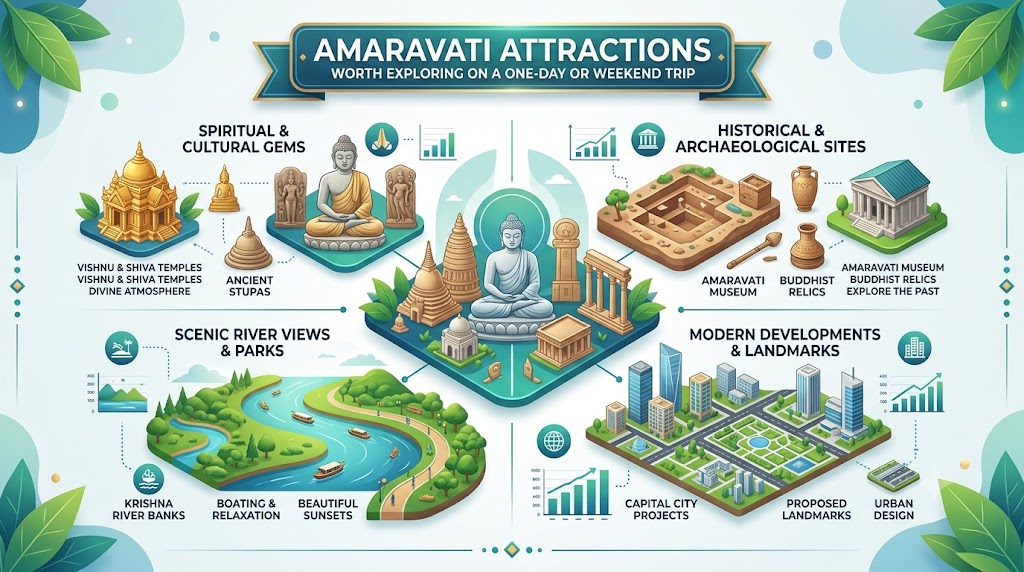
Set along the banks of the Krishna River in Andhra Pradesh, Amaravati brings together ancient regional history, sacred architecture, and an evolving community landscape. Whether you are arriving as a history buff, a family looking for a weekend outing, or a pilgrim visiting sacred shrines, exploring this historic town requires a grounded sense of where to go and how to plan your day. Navigating the area is straightforward once you understand how the historical core connects with nearby urban centers like Guntur and Vijayawada. This Amaravati travel guide is designed to give you clear, reliable, and actionable advice for discovering historic sites, navigating local community gatherings, and finding the best riverside viewpoints. To stay updated on upcoming exhibitions, seasonal festivals, and neighborhood gatherings, you can check resource platforms like AmaravatiOrbit.com before heading out on your journey.
6. Main Article
Understanding Amaravati: Heritage Meets Regional Hub
Amaravati holds a distinct position in the cultural landscape of Andhra Pradesh. Long before modern master plans emerged, this riverside town was a flourishing center of Buddhist learning, art, and commerce under the Satavahana dynasty over two thousand years ago. The artistic style that originated here—often termed the Amaravati School of Art—influenced architectural traditions and sculpture across South and Southeast Asia.
Today, visitors encounter two complementary identities. On one side lies the classical heritage town with ancient stupa remains, quiet monasteries, and centuries-old temple corridors. On the other side sits the wider capital region, characterized by broad road networks, government facilities, educational hubs, and expanding spaces for cultural gatherings.
Understanding this split helps travelers manage expectations. The primary sightseeing destinations, archaeological treasures, and spiritual stops remain centered around the traditional village of Amaravati and the immediate banks of the Krishna River, making it an accessible, rewarding destination for a dedicated day trip or weekend visit.
Top Places to Visit in Amaravati
When building your itinerary, focus on attractions that offer substantial historical value, peaceful environments, and authentic regional architecture.
The Great Amaravati Mahachaitya (Amaravati Stupa)
The remains of the Amaravati Stupa form the spiritual and historical anchor of the town. Established during the reign of Emperor Ashoka and significantly expanded during the Satavahana era, this site was once one of the largest Buddhist stupas in India.
While the towering dome of limestone and carved marble panels was dismantled over centuries, the preserved circular platform, foundational mounds, and intricately carved upright slabs give an immediate sense of its original scale. Walking the perimeter allows you to appreciate the early Buddhist railings carved with depictions of the Buddha’s life, everyday merchant scenes, and decorative floral bands. It is an essential stop for anyone wanting to understand early Andhra architecture.
Amaravati Archaeological Museum
Located just a short walk from the stupa grounds, the Archaeological Museum maintained by the Archaeological Survey of India houses genuine treasures excavated from the surrounding mounds.
Inside the galleries, visitors can view limestone panels, carved medallions, reliquary caskets, and statues of the Buddha dating from the 3rd century BCE through the medieval period. The museum provides clear explanatory panels showing how the stupa evolved across different political eras. It is best to visit during the warmer afternoon hours when the shaded indoor galleries offer a comfortable environment for slow, detailed viewing.
Dhyana Buddha Statue
Standing prominently near the banks of the Krishna River, the Dhyana Buddha is a modern landmark honoring the town’s profound Buddhist lineage. The statue rises to a height of 125 feet, depicting the Buddha seated in a serene meditative posture atop an expansive, multi-tiered pedestal building.
The pedestal itself contains museum halls and galleries displaying Buddhist art forms, educational frescoes, and exhibits detailing Buddhist philosophy. The surrounding landscaped gardens provide clear views across the water and offer a tranquil, open space suitable for family walks, photography, and quiet contemplation during the early morning or evening hours.
Amareswara Swamy Temple
Reflecting the harmonious coexistence of diverse spiritual traditions, the Sri Amareswara Swamy Temple is dedicated to Lord Shiva and sits right on the southern bank of the Krishna River. As one of the five sacred Pancharama Kshetras in Andhra Pradesh, this temple draws significant numbers of pilgrims throughout the year.
The lingam inside the sanctum is notably tall, requiring priests to stand on a raised platform to perform daily ablutions (abhishekam). The temple complex features towering gopurams built in traditional Dravidian style, quiet stone courtyards, and direct steps leading down to the river ghats. Modest attire covering shoulders and knees is expected here, and taking a few moments along the shaded stone walkways provides a window into vibrant local religious customs.
Cultural Landmarks and Riverside Spaces
Beyond the principal monuments, the natural river topography creates spaces for gentle exploration and leisure.
Krishna River Ghats
The riverfront is woven into everyday life in Amaravati. The ghats near the Amareswara Temple and adjoining river stretches come alive at dawn when morning prayers, boat movements, and bathing rituals take place.
Taking a walk along the river edges during sunrise offers cool breezes, panoramic views across the water, and an authentic look at local routines. Occasional local boat rides are run by community boatmen depending on water levels and administrative permissions; visitors choosing to take boat rides should verify that life vests are available on board.
Local Village Streets and Brasscraft Workshops
The residential lanes branching out from the main temple complex offer an unhurried, rural atmosphere. Small workshops occasionally practice traditional metal casting, stone carving, and brassware production, catering to temple restoration and souvenir buyers. Exploring these streets on foot allows you to engage with local craftsmen, discover small bakeries selling traditional regional snacks like pootharekulu and mirchi bajji, and observe authentic Andhra village hospitality.
Experiences and Things to Do in Amaravati
A successful visit combines structured sightseeing with time spent experiencing local community life.
1. Self-Guided Architectural Photography
The contrasting textures of Amaravati make it a compelling destination for photographers. The ancient limestone carvings at the stupa, the grand silhouette of the Dhyana Buddha against open skies, and the morning mist rolling off the Krishna River offer excellent natural framing. Early morning provides soft light without harsh shadows, which helps capture fine relief carvings on ancient stone surfaces.
2. Buddhist Heritage Walks
Because the central historical zone is compact, walking between the stupa ruins, the Archaeological Museum, and the Dhyana Buddha complex is entirely feasible. This walk covers roughly two to three kilometers of quiet roads. Walking gives you the flexibility to stop at small roadside tea stalls, observe local fauna, and read historical markers at your own pace.
3. Spiritual Participation and Temple Darshan
For spiritual travelers, participating in the morning archana or evening aarti at the Amareswara Swamy Temple provides a peaceful cultural anchor. The ringing bells, stone architecture, and sacred chants offer an immersive experience of classical Andhra Shaivite traditions.
4. Sampling Regional Andhra Flavors
Amaravati’s eateries and small family-run messes serve authentic Coastal Andhra cuisine. Look out for traditional vegetarian thalis served on banana leaves, featuring piping hot rice, gongura pachadi (tangy sorrel leaf chutney), seasonal vegetable curries, pappu (lentils), and fragrant sambar. The food is flavorful, spicy, and prepared with local ingredients.
Discovering Amaravati Events and Community Activities
While Amaravati is widely known for its ancient heritage, the wider region serves as a venue for cultural celebrations, academic conferences, sports meets, and seasonal fairs.
| Activity Category | Typical Examples | Target Audience | Best Venue / Area |
| Spiritual & Religious | Maha Shivaratri, Kartika Masam gatherings | Pilgrims, Families | Amareswara Temple & Ghats |
| Cultural & Heritage | Classical dance recitals, regional music events | Art lovers, Tourists | Heritage sites & open amphitheatres |
| Community & Sports | Morning runs, riverside cycling, youth sports | Locals, Students, Fitness seekers | Riverfront corridors & stadium grounds |
| Academic & Professional | Seminars, heritage research workshops | Researchers, Professionals | Regional institutions & conference halls |
Seasonal Festivals and Celebrations
The riverbanks and temple courtyards become particularly vibrant during major Hindu festivals. During Maha Shivaratri (usually occurring between February and March), tens of thousands of devotees arrive to offer prayers and bathe in the holy Krishna River. The town sets up fairgrounds with sweet stalls, handicraft displays, and cultural stage shows.
Similarly, the holy month of Kartika Masam (late autumn) sees evening deepotsavam ceremonies where women float miniature clay lamps on the river, transforming the water into a shimmering ribbon of light.
Workshops, Exhibitions, and Meetups
As universities and administrative organizations establish themselves in the capital periphery, academic symposiums, heritage exhibitions, and youth sports events take place regularly. Photography walks, student birdwatching camps near the wetlands, and weekend heritage tours are increasingly hosted by local clubs and educational trusts.
Verifying Events Before You Travel
If you are hoping to attend a public lecture, craft exhibition, or cultural festival during your visit, always confirm dates, start times, entry fees, and registration requirements through verified event directories. Schedules can change based on weather or local holidays, so consulting updated community boards such as AmaravatiOrbit ensures your weekend plans proceed smoothly without unexpected cancellations.
Practical Itineraries for Exploring Amaravati
To help you pace your visit comfortably, here are two realistic itinerary outlines depending on how much time you have available.
+-------------------------------------------------------------+
|               ONE-DAY HERITAGE ITINERARY                    |
|                                                             |
|  08:00 AM - 09:30 AM : Amareswara Temple & Morning Ghats    |
|  09:30 AM - 10:30 AM : Traditional Andhra Breakfast Break   |
|  10:30 AM - 12:30 PM : Great Amaravati Stupa Excavations    |
|  12:30 PM - 02:00 PM : Local Lunch & Rest Period            |
|  02:00 PM - 03:30 PM : Amaravati Archaeological Museum      |
|  04:00 PM - 05:30 PM : Dhyana Buddha Complex & Gardens      |
|  05:30 PM - 06:30 PM : Sunset Views along the Riverfront    |
+-------------------------------------------------------------+
Option 1: The One-Day Cultural Overview
This itinerary is ideal for day-trippers driving in from Guntur or Vijayawada.
- Morning (8:00 AM – 10:30 AM): Arrive early at the Sri Amareswara Swamy Temple to complete your visit before the mid-day heat sets in. Spend half an hour walking along the river ghats just behind the shrine, watching the river traffic. Follow this with an authentic breakfast of steamed idlis and crispy minapa garelu at a nearby local canteen.
- Midday (10:30 AM – 1:30 PM): Head to the ancient Amaravati Stupa mound while the sun is still pleasant. Walk the circumambulatory path and examine the foundational relief carvings. Enjoy a leisurely Andhra lunch at a local restaurant or hotel in town.
- Afternoon (1:30 PM – 3:30 PM): Spend the warmest part of the day inside the air-cooled halls of the Amaravati Archaeological Museum, studying the carved panels, relic boxes, and statues found during regional excavations.
- Late Afternoon & Sunset (4:00 PM – 6:00 PM): Drive over to the Dhyana Buddha statue. Explore the exhibition halls in the base, stroll through the manicured perimeter gardens, and watch the sun set over the water before your return drive.
Option 2: The Two-Day Heritage and Regional Weekend
For travelers with two full days, you can easily combine Amaravati’s classic monuments with surrounding regional attractions across the wider Guntur and Vijayawada belt.
- Day 1: Amaravati Core Heritage. Follow the complete one-day schedule outlined above, including the stupa, museum, temple, and evening by the river. Stay overnight in Vijayawada or Guntur, where a wide variety of accommodation, transit hubs, and family dining options are available.
- Day 2: Surrounding Historical Sites. Spend the following morning exploring the Undavalli Caves, an impressive 7th-century rock-cut cave complex carved into a sandstone hillside featuring a massive reclining statue of Vishnu. In the afternoon, visit Kondapalli village to observe artisans crafting iconic handmade wooden toys (Kondapalli Bommalu), followed by an evening visit to Bhavani Island on the Krishna River for open-air leisure activities.
Best Time to Visit and Seasonal Guidance
Because Amaravati is located in the coastal plains of Andhra Pradesh, weather conditions dictate the comfort of your trip.
Winter (November to February)
This is unequivocally the best time to visit Amaravati. Daytime temperatures generally hover between 20°C and 30°C, accompanied by gentle breezes from the river. The weather is pleasant for walking between open-air monuments, wandering through rural villages, and spending entire afternoons outdoors without fatigue.
Monsoon (July to October)
The monsoon brings substantial rainfall, turning the Krishna river basin vibrant and green. The river runs high, creating photogenic views. While showers can interrupt outdoor walking itineraries, the overcast skies keep temperatures moderate. If traveling during these months, pack sturdy umbrellas, waterproof bags for electronic devices, and footwear that handles slick stone paths comfortably.
Summer (March to June)
Summers in the region are hot and humid, with temperatures frequently climbing past 40°C during peak midday hours. If you must travel during the summer, restrict outdoor monument visits to the early morning hours (7:00 AM to 10:00 AM) and late afternoons. Reserve the midday hours for indoor museum galleries, resting, or sheltered dining.
How to Get to Amaravati
Amaravati is well-connected by road to major transport corridors in Andhra Pradesh, making it a viable day excursion.
- From Vijayawada (Approx. 35 to 40 km): Vijayawada serves as the primary air, rail, and transit gateway. The drive to Amaravati takes roughly 50 to 70 minutes via well-paved arterial roads running along the river corridor. Taxis, private ride-shares, and Andhra Pradesh State Road Transport Corporation (APSRTC) buses run between Vijayawada and Amaravati regularly.
- From Guntur (Approx. 32 to 35 km): Guntur is the closest major railway and commercial center. State buses and shared auto-rickshaws connect Guntur bus station with Amaravati throughout the day, with travel times ranging between 45 and 60 minutes.
- Local Commuting: Within Amaravati proper, auto-rickshaws are readily available near the main bus stand and temple entrances. Fares are usually negotiated before starting the trip. For maximum flexibility, hiring a self-drive car or private taxi for the full day from Vijayawada or Guntur is recommended.
Practical Travel Tips and Common Mistakes to Avoid
A smooth trip comes down to practical preparation. Keeping these common travel considerations in mind will save you time and discomfort.
- Dress Appropriately for Shrines: When visiting the Amareswara Swamy Temple, adhere to regional temple dress standards. Avoid sleeveless tops, short dresses, or beachwear. Modest cotton clothing keeps you cool while respecting local customs.
- Prepare for Stone Heat: The stone pathways around the stupa mound and temple courtyards absorb heat rapidly. Since shoes must be removed before entering active temple sanctums and certain monument enclosures, early visits prevent walking on scorching flagstones. Carrying thick cotton socks in your pocket can protect your feet.
- Confirm Museum Holidays: The Amaravati Archaeological Museum is typically closed on Fridays and national holidays. Double-check operating schedules before departing to avoid arriving at locked gates.
- Carry Adequate Cash: While digital payment methods via UPI are widely accepted in retail stores and hotels, small parking counters, flower sellers, shoe-keeping stands, and village fruit vendors often prefer small paper cash. Keep adequate change on hand.
- Hydration and Sun Safety: Coastal heat demands regular hydration. Carry a reusable water bottle, wide-brimmed sun hats, and basic sunscreen, especially when walking the unshaded grounds of the Great Stupa.
Practical Tips
- Ideal Trip Length: A single day is plenty to explore Amaravati’s main heritage sights; consider a two-day trip if you want to include the Undavalli Caves and Vijayawada.
- Peak Sightseeing Hours: Schedule open-air ruins and temples between 7:30 AM and 10:30 AM, reserving midday for the Archaeological Museum.
- Footwear Strategy: Wear comfortable slip-on shoes or sandals that are easy to remove at temple entrances, and bring along a pair of socks for hot stone surfaces.
- Transportation Tip: Base your lodging in Vijayawada or Guntur for the best choice of hotels, hiring a taxi or private vehicle for your day trip to Amaravati.
- Stay Updated: Check regional event directories on platforms like AmaravatiOrbit for notices about seasonal temple celebrations, local fairs, or road updates.
FAQs
What is Amaravati most famous for?
Amaravati is celebrated for its rich Buddhist legacy and the Great Amaravati Stupa, which flourished under the Satavahana dynasty. It is equally recognized for the historic Amareswara Swamy Temple, one of the five sacred Pancharama Shiva shrines, making it a prominent historical, archaeological, and pilgrimage destination in Andhra Pradesh.
Can I visit Amaravati as a one-day trip from Vijayawada?
Yes, Amaravati is an easy day excursion from Vijayawada, situated roughly 35 to 40 kilometers away. The scenic drive takes approximately one hour each way along well-maintained roads, leaving plenty of time to explore the stupa ruins, the museum, the Dhyana Buddha statue, and the riverside temples comfortably in a single day.
What are the primary things to do in Amaravati for history lovers?
History enthusiasts can inspect the foundational carvings of the Great Mahachaitya stupa, examine ancient limestone sculptures and relic caskets inside the Amaravati Archaeological Museum, explore ancient regional architecture at the Amareswara Swamy Temple, and study Buddhist iconography displayed at the 125-foot Dhyana Buddha complex.
When is the best time of year to plan an Amaravati visit?
The most pleasant period to visit is during the winter months, from November through February. Temperatures during this window are moderate and comfortable for outdoor walking tours. Midday heat can be intense from March through June, while monsoon months from July to October bring heavy rain and high humidity.
Is the Amaravati Archaeological Museum open every day?
The museum is open to visitors most days of the week from 9:00 AM to 5:00 PM, but it traditionally remains closed on Fridays and declared public holidays. Because maintenance schedules and national holidays can shift opening hours, it is best practice to confirm operating times before planning your daily schedule.
What types of events and festivals take place in Amaravati?
Amaravati hosts major traditional religious gatherings such as Maha Shivaratri and month-long Kartika Masam celebrations along the Krishna River ghats. In addition, the wider capital region hosts occasional Buddhist seminars, educational workshops, academic conferences, seasonal agriculture exhibitions, and youth sports events throughout the year.
How can I check current events happening in Amaravati today?
To discover today’s activities, weekend workshops, or cultural performances, check local community boards, state tourism announcements, and regional discovery platforms like AmaravatiOrbit. Verifying schedules directly through local community portals ensures you receive accurate venue details and timing information before heading out.
Is Amaravati a suitable destination for family trips with children?
Yes, Amaravati is a welcoming, educational destination for families. Children can learn about early Indian history firsthand at the stupa and museum, enjoy the spacious, landscaped lawns surrounding the Dhyana Buddha statue, and experience gentle morning walks along the riverfront ghats.
What clothing is appropriate when visiting Amaravati?
Lightweight, breathable cotton clothing is recommended throughout the year due to the warm climate. When visiting sacred places like the Sri Amareswara Swamy Temple, modest clothing covering your shoulders and knees is mandatory. Wearing easily removable footwear makes visiting multiple temples and monuments more convenient.
Are there good accommodation options in Amaravati proper?
Amaravati town has a modest selection of basic guesthouses, pilgrim rest houses, and budget lodges. For a broader range of premium, business, or family-friendly hotels and dining options, most travelers choose to stay in nearby Vijayawada or Guntur and travel to Amaravati for a day tour.
Conclusion
Amaravati provides a rare, grounded look into the layered cultural history of Andhra Pradesh. Walking from the two-thousand-year-old carved limestone foundations of the Great Stupa to the peaceful river steps of the Amareswara Swamy Temple offers visitors a deep connection to early Indian art, thought, and tradition. Whether you are organizing a spiritual pilgrimage, a family educational day trip, or a weekend break from nearby urban centers, planning around the seasons and coordinating your schedule ensures a rich travel experience. As the region develops, it continues to balance ancient tranquility with modern community life. Before setting out on your trip, review local listings on platforms like AmaravatiOrbit to discover local events, plan your routes, and enjoy the very best that this historic riverside destination has to offer.