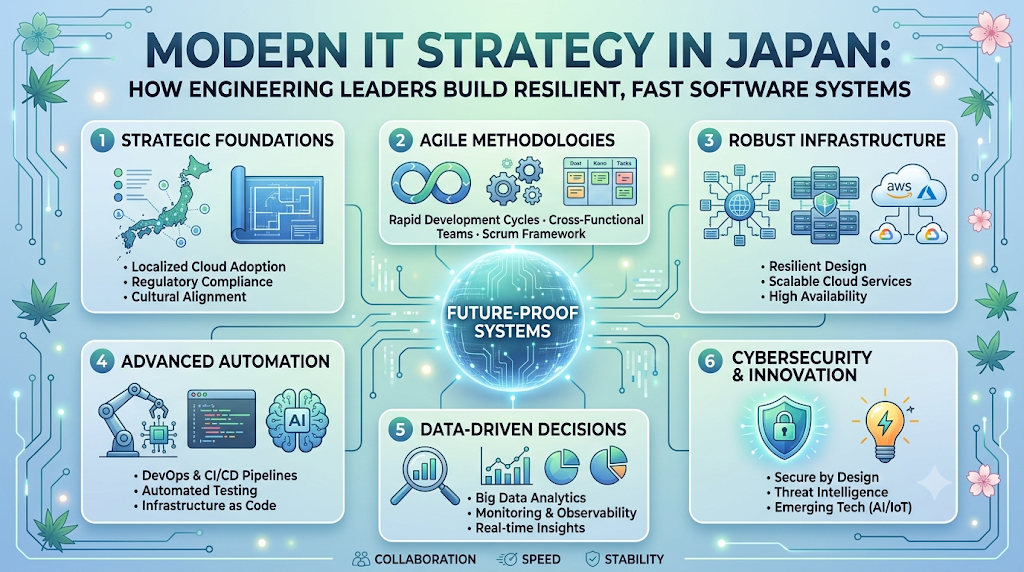
Running modern enterprise IT in Japan requires speed and steady stability, but bridging digital skill gaps remains a tough challenge for leadership. As consumer expectations rise, traditional departments face growing pressure to launch digital features quickly. At the same time, shifting away from manual maintenance routines and fragile server setups can feel confusing for many teams. Without the right knowledge, engineers spend more time fixing preventable release errors than building customer value. This makes experienced guidance essential for lasting success. This is where DevOpsSchool.jp steps forward as a trusted technical learning and strategic advisory partner for organizations across Japan. Through practical training, direct mentorship, and tested workflows, engineering managers can help their workforce gain technical autonomy, stop late-night emergencies, and ship dependable releases on schedule.
What is DevOpsSchool.jp?
DevOpsSchool.jp is an enterprise-level education and consulting resource designed to help technology teams master cloud delivery practices. It assists businesses that want to modernize software workflows through clear, practical learning tracks. The platform focuses on three main capabilities: team skill building, architectural consulting, and continuous technical advisory support.
Instead of relying on dry theory, participants work inside realistic lab environments to solve authentic operational challenges. DevOpsSchool.jp serves engineering leaders across Japan who need dependable, scalable upskilling roadmaps. The central mission is to develop confident in-house talent so your internal teams can operate, scale, and secure modern cloud environments independently.
Building Strong Internal Engineering Skills
Many technology organizations struggle with slow release cycles because their developers and system administrators operate in isolated silos. Developers focus on building features, while operations teams focus on keeping servers steady. This division creates friction, misunderstandings, and delayed projects. Structured education bridges this divide by aligning everyone around common automation practices.
Arranging dedicated DevOps 研修 gives your engineers a shared vocabulary and aligned operational targets. Staff members learn how to build automated pipelines that verify code quality instantly upon submission. An automated pipeline is an inspection path that checks, compiles, and tests code without human delay. By committing to comprehensive DevOps corporate training Japan, organizations empower their workforce to find and correct software flaws early. This structured practice cuts down release delays and maintains high system stability.
Hands-On Expert Guidance for Transformations
Shifting an established business toward agile operations brings many technical hurdles. Many IT departments waste time trying to build modern delivery setups through trial and error. Working with experienced practitioners helps teams bypass common setup mistakes and make sound architectural decisions from the start.
Engaging a seasoned DevOps consultant Japan provides your enterprise with clear, actionable technical roadmaps. These advisors review your code pipelines, inspect your server setups, and guide staff through daily operational adjustments. Through focused DevOps コンサルティング, companies modernize their release pipelines and select tools that fit their exact infrastructure needs. With expert support on hand, your engineering teams modernize their technical workflows without disrupting active business operations.
Mastering Cloud-Native Infrastructure Tools
Modern applications run best when split into modular, lightweight parts. To achieve this flexibility, technical teams rely on software containers. A container holds an entire application, along with its background tools, inside a single standardized package. This ensures the application runs identically on any laptop, test server, or cloud platform.
Because enterprise systems use hundreds of containers, orchestrating them manually is impractical. Teams use Kubernetes to handle this complexity automatically. Enrolling in a detailed Kubernetes 研修 teaches your engineers how to deploy container clusters, recover failed nodes automatically, and route user traffic smoothly.
Engineers must also create and update cloud networks using clear code files rather than manual dashboard clicks. This discipline is called infrastructure as code. Through hands-on Terraform 研修, engineers learn to define networks, databases, and servers using declarative text files. Storing infrastructure as versioned code allows your engineers to recreate entire production environments safely within minutes.
Core Technical Training Tracks
| Training Domain | Core Tool/Focus | Business Benefit | Target Team |
| CI/CD Pipeline Automation | Git, Jenkins, GitLab | Faster delivery cycles and fewer human handover mistakes | Software Developers & Sysadmins |
| Containerized Platforms | Docker, Kubernetes | High service availability and effortless app scaling | Infrastructure & Cloud Engineers |
| Infrastructure as Code | Terraform, Ansible | Repeatable environment setups without manual drift | Platform Engineers & System Leads |
| Operational Reliability | Prometheus, Grafana, SLOs | Rapid incident recovery and high customer uptime | SRE Teams & Systems Engineers |
| Automated Code Security | Trivy, SonarQube, Vault | Built-in compliance checks without release slowdowns | Security Engineers & DevOps Leads |
| Applied AI Systems | MLflow, Kubeflow | Reliable deployment and monitoring of machine models | Data Engineers & Machine Learning Teams |
Ensuring System Reliability and Uptime
Modern enterprise customers expect applications to be available every second of the day. Unexpected system crashes harm business reputation and reduce revenue. Site Reliability Engineering, commonly called SRE, treats IT operations as an engineering problem that can be automated through software tools.
Completing an SRE 研修 teaches engineering teams how to define measurable service health standards. Staff learn how to establish service level objectives, which act as realistic reliability targets for daily systems. They also build real-time monitoring alerts using Prometheus and Grafana. Instead of reacting with panic when a problem happens, teams follow structured incident response plans. They uncover hidden bottlenecks before customers notice issues and hold blameless reviews to ensure systems stay durable.
Integrating Security into Daily Delivery
In traditional IT projects, security checks only take place right before a major release. If an auditor finds critical flaws at the last moment, the entire launch gets delayed. Modern engineering models embed automated security scans inside every single phase of the delivery process. This strategy is known as shifting security to the left.
Through interactive DevSecOps 研修, developers learn how to detect dangerous vulnerabilities directly in their programming editors. The automated pipeline tests dependencies, scans container images, and reviews configuration files during everyday builds. Security becomes a shared daily habit for all engineers rather than a slow roadblock at the end. Because automated checks run constantly, enterprises ship modern features quickly while keeping sensitive data protected.
Scaling AI and Machine Learning Pipelines
Enterprises across Japan increasingly use artificial intelligence to automate operations and make strategic forecasts. However, developing an algorithm on a local workstation differs greatly from serving millions of live predictions securely. Artificial intelligence models often decline in quality when incoming real-world data drifts over time.
Enrolling your data teams in an MLOps 研修 teaches engineers how to apply proven software disciplines to machine learning assets. Engineers learn how to automate data validation, record model training histories, and deploy updates safely into production. They also configure real-time monitors to track accuracy trends continuously. This structured process keeps your AI systems reliable, predictable, and simple to upgrade as market conditions change.
Continuous Technical Assistance for Enterprise Teams
Adopting modern engineering practices is a continuous organizational journey that extends past initial workshops. Even capable engineers face complex cloud outages, tangled container networks, and puzzling release pipeline errors. Access to seasoned technical support provides leaders with confidence throughout their digital transformation.
Dependable DevOps support Japan delivers timely operational advice when complex technical issues arise. Experienced specialists review your infrastructure configurations, assess pipeline bottlenecks, and assist with root-cause investigations during outages. This dependable safety net helps your internal workforce overcome difficult hurdles quickly, keeping key enterprise initiatives on course.
Evaluating Training and Consulting Providers in Japan
| Evaluation Factor | What to Look For | Why It Matters for Japanese Enterprises |
| Interactive Cloud Sandboxes | Fully functional lab environments for every student | Practical practice builds lasting muscle memory far better than lectures. |
| Tailored Enterprise Content | Course tracks adapted to existing legacy tools and goals | Large companies run mixed systems that require thoughtful transition paths. |
| Battle-Tested Practitioners | Instructors who have managed large-scale production outages | Practical field wisdom provides realistic advice for tough system problems. |
| Comprehensive Curriculum | Unified tracks covering containers, automation, and SRE | Prevents isolated tool silos by showing how cloud tools connect together. |
| Ongoing Technical Mentoring | Dedicated post-course review and troubleshooting access | Enables engineers to apply classroom lessons directly to real-world tasks. |
Real-Life Scenarios and Team Experiences
- Modernizing Legacy Server Environments: A traditional banking operations unit managed server patching through manual overnight shifts. By learning containerization practices, they packaged their applications into standardized container images. They now execute clean updates during regular daytime hours without any customer downtime.
- Streamlining Slow Release Pipelines: An enterprise development team suffered frequent deployment failures due to manual testing handoffs. After establishing an automated testing pipeline, every code update undergoes automated verification within minutes. They cut their defect rates significantly while shipping new features twice as fast.
- Resolving Unstable Cloud Platforms: An online retail operations team spent hours dealing with repeated server crashes during peak traffic spikes. By adopting site reliability habits, they built self-healing rules into their container platform. Now, failing servers restart automatically, protecting service continuity without manual intervention.
Common Mistakes to Avoid in Tech Transformations
- Purchasing Tools Before Upskilling Talent: Companies often buy advanced cloud subscriptions before training their engineers. Without proper skills, new tools create complexity and waste enterprise budgets.
- Relying Exclusively on Passive Theory: Watching presentations or reading manuals does not prepare staff for operational emergencies. Engineers must write code and fix broken environments within hands-on labs.
- Treating System Security as an Afterthought: Waiting until release day to scan code leads to painful delays. Automated security checks must run continuously within the daily delivery pipeline.
- Neglecting System Observability and Metrics: You cannot troubleshoot problems that your monitoring tools cannot see. Teams must set up clear metrics, logs, and trace dashboards before releasing code.
- Attempting to Automate Everything at Once: Trying to rebuild an entire legacy system overnight causes burnout and stalled projects. Begin with a single manageable build task and expand from there.
- Keeping Operations and Developers Separated: Handing tools to developers without involving system administrators creates friction. Both groups must learn and maintain delivery pipelines together.
- Focusing on Deployment Speed over Stability: Releasing code rapidly provides zero value if your platform crashes repeatedly. Balance delivery frequency with robust site reliability principles.
- Failing to Measure Real Operational Progress: Many organizations adopt new cloud software without tracking measurable outcomes. Keep track of tangible indicators like deployment frequency, lead time, and recovery speed.
How DevOpsSchool.jp Can Help
DevOpsSchool.jp assists modern enterprises in creating agile, dependable engineering environments with confidence. The platform builds customized corporate curricula tailored around your exact infrastructure platforms, existing applications, and strategic timelines. Expert instructors guide your staff through immersive, interactive labs focused on resolving real operational roadblocks.
Whether your engineers need fundamental automation guidance or advanced container orchestration training, delivery formats adapt to your business schedule. Through a balanced combination of structured workshops, specialized consulting, and ongoing technical advisory services, DevOpsSchool.jp equips your workforce with the skills required to run resilient cloud platforms.
A Simple 7-Step Upskilling & Advisory Roadmap
- Step 1: Goal: Identify your primary transformation targets, such as reducing release lead time, lowering hosting costs, or improving uptime.
- Step 2: Search: Research specialized technical education partners with proven experience in modern cloud delivery and infrastructure automation.
- Step 3: Shortlist: Pick established training providers that deliver interactive cloud labs and comprehensive curriculum tracks.
- Step 4: Compare: Examine course roadmaps, trainer qualifications, and the practical depth of lab exercises among your top choices.
- Step 5: Ask: Discuss your specific legacy challenges, current skill gaps, and scheduling preferences directly with education advisors.
- Step 6: Verify: Review past enterprise case studies, confirm instructor experience, and verify post-training technical assistance options.
- Step 7: Decide: Select the most suitable learning path, schedule your corporate workshops, and begin modernizing your delivery workflows.
Frequently Asked Questions (FAQ)
Question 1: What core business advantages does DevOps bring to an enterprise?
The main benefit is faster, safer software delivery with fewer human errors. By breaking down barriers between developers and operations teams, companies create automated workflows that catch bugs early. This helps businesses deliver reliable digital services, respond quickly to market changes, and keep critical systems running smoothly for their end customers.
Question 2: Why should an organization select corporate training instead of self-paced study?
Self-paced study often lacks practical direction, leaving engineers overwhelmed by fragmented online guides. Structured corporate training delivers a focused curriculum tailored to your company’s actual technical challenges. With live mentors and hands-on lab sessions, your entire engineering workforce aligns around the same standardized delivery practices quickly and effectively.
Question 3: How does Kubernetes simplify enterprise cloud management?
Kubernetes automates the deployment, scaling, and health management of software containers across server clusters. When an application instance fails, the platform replaces it automatically. It balances incoming user traffic across healthy nodes and adjusts system capacity based on real demand, cutting manual maintenance work and preventing downtime.
Question 4: In what ways do DevOps and SRE complement one another?
DevOps represents an organizational mindset focused on collaboration, rapid automation, and continuous delivery. Site Reliability Engineering provides concrete, engineering-driven methods to implement that vision reliably. SRE uses measurable targets like service level objectives and error budgets to protect platform availability while still allowing developers to launch regular updates.
Question 5: Can older enterprise applications be moved into container environments?
Yes, most legacy applications can be packaged into modern software containers successfully. While some older architectures need minor configuration adjustments, containerizing them makes them far easier to test, move, and run on cloud platforms. Professional education shows your engineering teams how to containerize legacy software step by step safely.
Question 6: Why is Terraform effective for managing cloud infrastructure?
Terraform allows engineers to define servers, storage, and networking through structured code files instead of manual configuration panels. This approach creates consistent, repeatable environments, eliminates human setup mistakes, and maintains an auditable record of all infrastructure changes. Teams can spin up complete, identical cloud environments in just a few minutes.
Question 7: When does bringing in an outside consultant make strategic sense?
Hiring an outside advisor makes sense when your internal team lacks deep experience with modern cloud tools or delivery pipelines. External specialists provide practical architectural guidance, establish robust automated pipelines, and mentor your engineers along the way. This prevents costly trial-and-error mistakes during critical digital transformation initiatives.
Question 8: Why is shifting security checks left beneficial for delivery speed?
Integrating security checks early into daily build routines allows developers to spot vulnerabilities while writing code. Fixing flaws early is much faster and cheaper than handling critical security alerts right before launch. This continuous testing keeps customer data protected while ensuring your software meets strict enterprise compliance standards without project delays.
Question 9: What foundational skills should engineers possess before joining classes?
Engineers only need basic familiarity with standard terminal commands, general operating system concepts, and an interest in automation. Professional training tracks start with clear core fundamentals before moving into advanced cloud orchestration. Customized enterprise programs can also be tailored to match the current skill level of your engineering department.
Question 10: How does MLOps differ from traditional software delivery pipelines?
Traditional DevOps focuses on deploying application code, running tests, and keeping servers healthy. MLOps covers these tasks while also managing evolving data sets, model training cycles, and prediction accuracy over time. It automates testing and deployment so artificial intelligence models remain accurate and reliable when underlying data patterns shift in production.
Question 11: How much time does an enterprise team need to complete a course?
Most intensive enterprise training tracks run between three and five days of focused workshop sessions. However, mastering everyday operational implementation across an organization takes several months of regular practice. Continuous mentoring and ongoing lab access ensure engineers reinforce their knowledge while working on regular day-to-day business projects.
Question 12: How can leadership evaluate the success of an upskilling program?
Leaders can evaluate success by monitoring operational metrics such as deployment frequency, change lead time, and incident recovery speed. Decreased production defects, lower cloud infrastructure spend, and reduced burnout among engineers also demonstrate clear value. These tangible improvements show that your training investment directly benefits overall enterprise performance.
Conclusion
Building a resilient, high-velocity engineering organization in Japan requires more than adopting modern cloud tools. Sustainable technical success comes from investing in your people, embedding automated quality controls into daily routines, and establishing strong operational reliability habits across all teams. By embracing structured education and partnering with seasoned practitioners, organizations eliminate operational delays and protect customer trust. With its hands-on labs, comprehensive curricula, and dedicated advisory support, DevOpsSchool.jp stands ready to help your enterprise cultivate confident engineers, modernize technical systems, and deliver reliable software solutions every day.