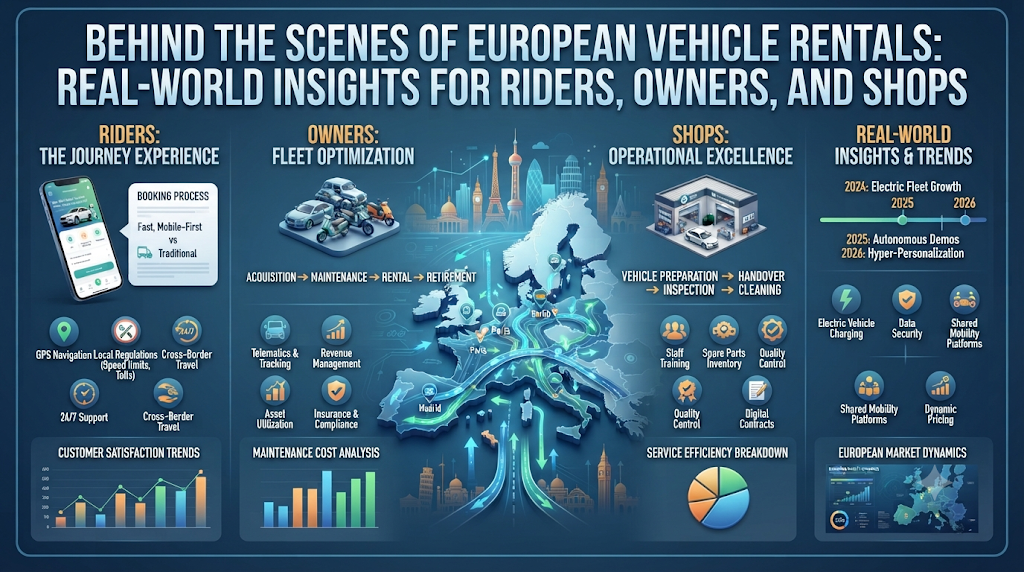
Every summer and spring across Europe, millions of journeys begin with a simple key handover. A tourist picks up a scooter near a sunny harbor, a local rider hands over a spare touring bike for the weekend, and a small shop owner updates a live booking screen before opening the front door. Online platforms like MotoShare Europe connect these everyday moments by bringing travelers, private owners, and independent rental shops onto one digital marketplace while promoting free fleet management tools.
Looking at European mobility from the inside makes everything clearer. In this guide, you will see how riders choose the right ride, what shapes daily rental rates, how private owners list vehicles safely, and how digital software keeps small shops running smoothly.
How Riders Choose Between Two and Four Wheels in Europe
European destinations reward travelers who match their vehicle to the local terrain. A heavy highway cruiser feels tiring on narrow island lanes, while a tiny city moped struggles on steep alpine passes.
When planning a motorcycle rental Europe trip, experienced riders pick based on three daily realities:
- Urban Traffic and Parking: In historic cities like Rome, Lisbon, or Athens, 50cc and 125cc scooters slip through narrow streets and park easily.
- Scenic Weekend Loops: Mid-size street bikes offer light handling and fun cornering on coastal roads and countryside hills.
- Multi-Country Touring: Large touring motorcycles carry two riders and side luggage comfortably over long highway distances.
- Group and Weather Flexibility: Compact cars keep families, heavy suitcases, and camera gear dry when mountain weather turns rainy.
Inside a Peer to Peer Motorcycle Rental Europe Booking
Traditional rental desks work like standard retail counters with fixed shop hours and uniform corporate fleets. By contrast, a peer to peer motorcycle rental Europe marketplace works through direct human connection between travelers and local hosts.
Here is what happens behind the scenes during a typical marketplace rental:
- Smart Filtering: The traveler searches by city, engine size, and exact dates to compare open bikes or scooters.
- Pre-Booking Chat: The rider messages the host to check seat height, helmet availability, or local road tips.
- Transparent Request: Both sides review the daily rate, mileage cap, and security deposit before confirming the booking.
- Personal Handover: The host and rider meet at the agreed time, walk around the vehicle together, and snap photos before departure.
Corporate Counters vs. Peer-to-Peer Marketplaces
| Everyday Factor | Corporate Rental Counter | Peer-to-Peer Marketplace |
| Where Vehicles Come From | Bulk-purchased corporate fleets | Private enthusiasts and local neighborhood shops |
| How Prices Are Shown | Base rate plus desk add-ons | Clear listing prices agreed upon before pickup |
| When Pickup Happens | Strict shop opening and closing hours | Flexible handover times arranged directly |
| Local Riding Support | Printed tourist maps at the desk | Insider route and safety tips from local hosts |
What Drives Motorcycle Rental Cost Europe Rates
Daily prices vary across Europe because local taxes, wages, insurance costs, and tourist seasons change from country to country. Understanding the motorcycle rental cost Europe structure helps travelers spot fair value quickly.
Seven main factors shape the final price:
- Country and Tax Rates: Renting in Switzerland, Norway, or Iceland costs noticeably more per day than renting in Portugal, Spain, or Greece.
- Engine Size and Bike Class: A light 125cc city scooter costs much less per day than a 1200cc adventure motorcycle.
- Peak vs. Shoulder Season: July and August bring peak holiday demand and higher prices, while May, June, and September offer gentler rates.
- Length of Stay: Booking for seven or ten days usually unlocks a lower daily rate than a short two-day weekend hire.
- Security Deposit Hold: Providers place a temporary, refundable hold on your card to cover minor scratches, traffic tickets, or late returns.
- Insurance Protection Level: Basic third-party liability insurance is mandatory across Europe, while optional packages that lower your damage excess add a daily fee.
- Distance Caps and Fuel: Some rentals include unlimited kilometers, while others cap daily distance. Almost all rentals require returning the tank full.
Illustrative Example of a 7-Day Countryside Bike Tour
Note: This scenario is a hypothetical example created to show how rental math works and does not reflect a live listing.
Suppose a rider books a 650cc sport-touring bike in central France for 7 days in May. The host sets the rate at €65 per day (€455 total). Adding two side cases costs €9 per day (€63 total), and a lower-excess protection plan adds €11 per day (€77 total). The complete rental comes to €595, plus a refundable €650 security deposit released after a clean return.
European Driving Licences and Border Rules
Europe consists of more than forty independent countries, each enforcing its own licensing and traffic laws. Checking your documents early prevents surprises at pickup.
- EU Motorcycle Licence Classes: European permits use four standard categories: AM (mopeds up to 50cc), A1 (light bikes up to 125cc), A2 (medium bikes up to 35 kW), and A (unrestricted motorcycles). Your licence must match the bike’s power rating.
- Using a Car Licence for 125cc Scooters: Nations like Spain, Italy, and France allow drivers who have held a Category B car licence for two or three years to ride 125cc scooters inside their own national borders. However, this local rule does not automatically allow riding across borders into neighboring countries.
- International Driving Permits (IDP): Travelers visiting from outside Europe should carry an IDP alongside their original home driving licence, especially when the home permit is not written in the local alphabet.
- Border Crossing Consent: Never ride a rented motorcycle or car into another country without written permission from the owner or rental shop. Standard insurance coverage often stops working if you cross an unapproved border.
How Private Owners Turn Parked Vehicles into Side Income
Leaving a motorcycle, scooter, or car parked in a garage for months still costs money in annual road tax, insurance, and servicing. Sharing your vehicle with checked travelers helps turn idle days into steady side income.
Practical Guide to Rent Out My Motorcycle
If you are asking, “How do I rent out my motorcycle without risking damage or legal trouble?” follow these five simple habits:
- Check Local Laws and Insurance: Confirm your country’s vehicle-sharing rules and ask your insurer whether paid peer-to-peer rentals are covered. Never assume personal commuting insurance covers a paying rider.
- Inspect Mechanical Safety: Check tire tread depth, brake pads, chain tension, engine oil, and all lights before every handover.
- Post Honest, Bright Photos: Show every angle of the bike, the dashboard, and any minor scratches so expectations stay clear from day one.
- Verify the Renter’s Licence in Person: Always check the rider’s physical driving licence and passport or ID before handing over the keys.
- Document Condition Together: Walk around the bike together at pickup and return, taking timestamped photos to avoid disputes.
Simple Routine to List My Car for Rent
If you have an extra car at home and want to list my car for rent, follow the exact same routine. Vacuum the interior, remove personal items, check fluid levels and tire pressure, and leave the registration papers and safety vest inside the glovebox. Always tell visiting drivers whether the car uses petrol, diesel, or electric charging so they never put the wrong fuel in the tank.
Inside an Independent Rental Shop: Why Digital Tools Matter
Behind the counter of a small rental shop, busy weekends can turn chaotic fast. Tracking fifteen scooters, twenty bicycles, or ten cars using wall calendars and paper notebooks often leads to double bookings, lost forms, and slow check-ins.
Adopting free vehicle rental management software gives small operators a clean digital control panel without expensive monthly software bills.
Essential Software Tools for Every Fleet Type
Different rental businesses rely on specific features to keep daily work moving smoothly:
- Vehicle Rental Booking System: Gives customers a live online calendar to check free dates, see total costs, and submit booking requests while automatically blocking reserved dates.
- Scooter Rental Software: Built for fast city check-ins, helping staff log short hourly or daily hires, track helmet sizes, and store rider IDs in seconds.
- Bike Rental Software: Helps bicycle and e-bike shops manage frame sizes, battery charging cycles, lock codes, and family group bookings without paper clutter.
- Free Car Rental Software: Helps small car agencies log multi-day reservations, record starting and ending mileage, track fuel levels, and store signed agreements digitally.
Paper Notebooks vs. Digital Rental Software
Moving daily shop tasks onto one digital system saves hours of repetitive desk work every week.
| Daily Shop Task | Paper Notebooks & Spreadsheets | Digital Rental Management Software |
| Checking Open Vehicles | Flipping through pages or searching files | Live visual calendar showing free and booked units |
| Preventing Double Bookings | High risk during busy tourist weekends | Automatic date blocking once a booking is confirmed |
| Customer Profiles | Loose paper forms and scattered emails | Searchable digital records with licence history |
| Payment & Revenue Logs | Slow manual math at month-end | Clear payment tracking and revenue summaries |
| Handover Checklists | Paper forms that easily get misplaced | Organized digital trip logs saved in one place |
Common Mistakes to Avoid
Avoiding a few everyday errors saves time, money, and stress:
- Travelers Ignoring Weather Gear: Riding in European mountains without a rain layer or warm gloves can make summer afternoons chilly.
- Owners Skipping Insurance Checks: Listing a personal bike or car without confirming valid rental insurance creates serious financial exposure.
- Shops Waiting Until July to Organize: Relying on paper calendars during peak tourist season almost always leads to scheduling overlaps and stressed staff.
Four Golden Rules for Smooth European Rentals
Keep these four habits in mind whether you are riding, hosting, or managing a fleet:
- Confirm Terms in Writing: Agree on pickup hours, mileage caps, fuel rules, and border permissions inside your booking chat.
- Match Licence to Engine Power: Always check that the driver’s physical licence covers the exact vehicle class before handing over keys.
- Photograph Both Handovers: Five minutes of clear daylight photos at pickup and return prevents disagreements later.
- Centralize Your Schedule: Track all reservations, customer details, and payment logs inside one reliable digital platform.
How MotoShare Europe Connects the Community
MotoShare Europe operates as an online vehicle rental marketplace designed to connect travelers, motorcycle enthusiasts, local residents, private vehicle owners, and independent rental shops across Europe. Focused on motorcycles, scooters, bicycles, and cars, the platform enables users to compare transparent listings and send booking requests directly to participating local providers.
For independent rental shops and fleet operators, MotoShare Europe also promotes free vehicle rental management software. Its advertised features are built to help operators manage vehicle listings, reservations, customer records, fleet availability, payments, revenue tracking, and operational reporting from one place. Because regional availability and software tools can vary by country and business setup, travelers and shop owners should always verify current details directly on the platform.
Conclusion
Looking behind the scenes of European vehicle rentals shows that clear communication and smart tools benefit everyone. Travelers enjoy better holidays when they match their vehicle to the route, check national licence rules, and inspect the ride at pickup. Private owners earn side income safely when they verify insurance and check rider documents carefully. Meanwhile, independent rental shops save valuable hours every week by replacing paper logs with modern digital booking systems.
Take your next step today by checking your driving licence categories, preparing a simple handover checklist, or exploring transparent online marketplaces that simplify European mobility.
Frequently Asked Questions (FAQs)
1. How can travelers find a reliable motorcycle rental Europe provider?
Compare verified local shops and peer-to-peer marketplaces online well before your trip. Look for transparent daily rates, bright photos from multiple angles, honest condition notes, and written terms covering deposits and daily mileage caps.
2. Why do riders choose a peer to peer motorcycle rental Europe marketplace?
Peer-to-peer marketplaces connect travelers directly with private owners and independent local hosts. This setup often provides more flexible pickup times, unique motorcycle models, and practical local route tips from experienced riders.
3. What factors shape motorcycle rental cost Europe travelers pay?
Prices depend on the destination country, travel season, engine size, and rental duration. Small scooters in southern Europe typically cost much less per day than large touring bikes in higher-cost countries during peak summer months.
4. Can I ride a 125cc scooter in Europe using a standard car driving licence?
Several European countries—such as Italy, Spain, and France—allow drivers who have held a Category B car licence for two or three years to ride 125cc scooters locally. However, rules vary by nation, and this local exception does not automatically allow cross-border travel.
5. When do non-European tourists need an International Driving Permit?
Visitors arriving from outside the EU generally need an International Driving Permit (IDP) alongside their original home driving licence, especially if the home permit was issued outside Europe or is not printed in the local alphabet.
6. What should I check before I rent out my motorcycle to a traveler?
First, verify your country’s vehicle-sharing laws and confirm with your insurer that paid peer-to-peer rentals are covered. Next, inspect your tires, brakes, chain, fluids, and lights, and verify the renter’s physical driving licence at pickup.
7. How do I safely list my car for rent in my local neighborhood?
Clean the interior and exterior thoroughly, confirm that your insurance allows rental use, upload clear daylight photos, and set clear daily mileage and fuel rules. Always verify the driver’s physical licence and ID before handing over the keys.
8. What is free vehicle rental management software used for?
It helps independent motorcycle, scooter, bicycle, and car rental shops manage fleet availability, customer reservations, driver records, and payment logs in one digital dashboard without paying high monthly software fees.
9. How do scooter rental software and bike rental software help busy shops?
These specialized tools speed up quick hourly or daily check-ins, track helmet sizes or lock codes, monitor e-bike battery levels, and keep customer ID records organized during busy tourist hours.
10. Why should small agencies use free car rental software instead of paper logs?
Paper logs and basic spreadsheets do not automatically block reserved dates, which easily leads to double bookings. Dedicated car rental software keeps vehicle calendars, mileage logs, customer records, and payment statuses updated in real time.
11. How does a vehicle rental booking system prevent scheduling overlaps?
A vehicle rental booking system links your live fleet calendar directly to online reservation requests, automatically locking booked dates as soon as a customer reservation is confirmed.
12. Are refundable security deposits common across European vehicle rentals?
Yes, nearly all commercial rental shops and many peer-to-peer hosts hold a refundable security deposit on a payment card to cover potential minor damage, missing gear, or unreturned fuel until the vehicle is returned safely.