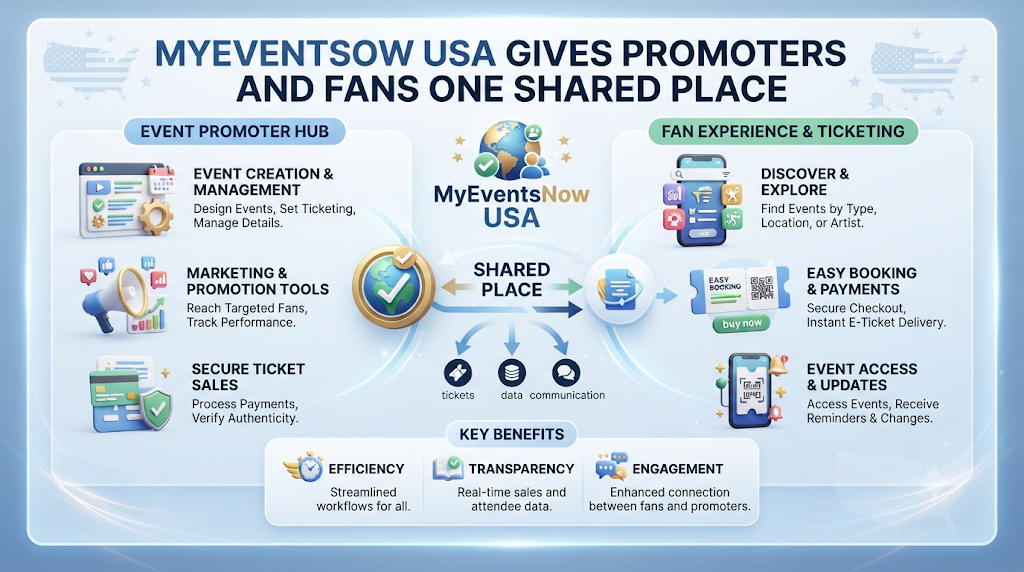
A first-time promoter has a plan. She has a date in mind and a few helpers ready. But she has no easy way to tell people. Across town, a college student wants a fun night out. He scrolls for an hour and finds nothing that fits.
Both of them have the same problem. They can’t find each other. That gap is where MyEventsNow USA steps in.
It’s an online event discovery, ticket booking, and event management platform. It connects organizers, businesses, entertainment providers, and attendees across the United States. This article walks through both views. First you’ll see the attendee’s side. Then you’ll see the promoter’s side.
The Platform in Brief
MyEventsNow USA is a meeting point. Attendees go there to explore local experiences and entertainment. They can also check the event registration and ticket booking options that are offered.
Organizers go there to share what they’ve planned. That includes businesses, event agencies, educational institutions, nonprofits, community organizations, and independent promoters. Each can list events online. This can help them gain visibility and reach people who might attend.
The event types vary a lot. Think concerts, festivals, comedy shows, workshops, conferences, exhibitions, networking events, and community celebrations. In major American cities, you can also find business conferences, training workshops, cultural festivals, and educational events.
The marketplace has a few extras. It offers venue exploration and organizer promotion. It also includes event management software capabilities. These tools help organizers handle the work behind the scenes.
Two Views, One Event
Here’s a short side-by-side look. Each row shows one part of the journey.
| Area | For Attendees | For Organizers |
|---|---|---|
| Main purpose | Discover events and book a place. | Share events and handle bookings. |
| Event discovery or publishing | Search by place, interest, type, and date. | Build and publish an event page. |
| Tickets and booking | Compare the ticket choices offered. | Create ticket types and entry rules. |
| Registration and communication | Give your details where sign-up is offered. | Keep guest details and message participants. |
| Event information | Study the page before you commit. | Write the page so people understand it. |
| Marketplace extras | Look at venues. | Use promotion and management tools. |
Start at the left and move across each row. You’ll see a task for attendees. Then you’ll see the matching job for organizers.
Each side depends on the other. A good page gives a fan the facts. A curious fan gives the page a reason to exist.
Part One: Seeing the Platform Through an Attendee’s Eyes
Scanning the full calendar
Begin with a wide look. You can scan Upcoming Events in USA to see what’s on offer. The calendar may include concerts, festivals, comedy shows, workshops, and conferences. It may also show exhibitions, networking events, and community celebrations.
A wide look suits people with no fixed plan. A student can wander through ideas. A family can spot a festival they’d never heard of. A professional can notice a conference that matches their field.
Tip: Don’t filter too soon. Spend a few minutes just looking. Surprises often come from the events you weren’t searching for.
Zooming in on your own area
After the wide look, narrow your search. Events Near Me is a handy idea to keep in mind. Users can explore activities by preferred location, interests, event categories, and dates.
Picture a nurse who works late shifts. She might look for a quiet workshop on her day off. Now picture a dad with two kids. He might look for a daytime celebration. Each person shapes the list around real life.
Tip: Pick your free date first. Next choose a category. Then add your interest. This order trims a long list fast.
A visitor’s view of New York City
Visitors planning a trip may check Events in New York City. The platform lists live music festivals, technology conferences, cultural celebrations, nightlife, professional meetups, and entertainment experiences there.
The mix fits different travelers. Someone with a free evening may want nightlife. A business traveler may want a professional meetup. A resident may just want to see what’s new this month.
Tip: Event types vary by date, so check what’s listed for yours. Then confirm the venue. Do this before you plan your route or your day.
Finding a live show
Music fans have a section of their own. It covers live performances, independent artists, music festivals, and other ticketed experiences. If you need Concert Tickets USA, this is a good place to start.
Independent artists share space with larger festivals. That helps fans who like hearing new names. Ticket choices depend on the organizer, so each listing can look a bit different.
Tip: Open two shows side by side. Compare the date, venue, and ticket details. A short comparison makes the decision easier.
Growing skills and making contacts
Some events are about learning and meeting people. In major American cities, you can find business conferences, training workshops, networking events, and educational events. Not every type appears in every city.
These events help students, job seekers, and working adults. A workshop fits someone who likes hands-on learning. A networking event fits someone who wants to meet people in the same field.
Tip: Decide your goal before you choose. Then read the event description closely. It tells you if the format matches what you need.
Comedy, art shows, and local parties
Fun comes in many forms. You can look for comedy shows, exhibitions, cultural festivals, and community celebrations. These work well for friends, families, and travelers.
A comedy night suits a small group. An exhibition suits people who enjoy walking and looking. A community celebration gathers neighbors around one shared theme.
Tip: Planning with friends? Send them the event details first. Make sure everyone can make the date and reach the venue. Then book together.
Reading the fine print before you buy
You’ve picked an event. Now slow down and read the whole page. Online Event Ticket Booking USA goes smoothly when you know what you’re choosing. Look at the date, the venue, the description, and the ticket and booking options.
Some events may offer sign-up. Others may focus on tickets only. This depends on the organizer. Never assume two events work the same way.
Tip: Read the ticket types and entry options first. Then read the rest. Clear facts make the final step feel easy.
Quick Guide to Event Groups
Events fall into a few main groups. This table shows what attendees can explore and what organizers can do.
| Event Category | What Attendees Can Explore | What Organizers Can Do |
|---|---|---|
| Concerts and music | Live shows, independent artists, music festivals. | List music events and set up tickets. |
| Comedy and entertainment | Comedy shows and other entertainment shows. | Entertainment providers can list their events. |
| Workshops and educational events | Training workshops and learning events. | Educational institutions can list events. |
| Conferences and networking | Business conferences and professional networking. | Businesses and agencies can list events. |
| Festivals, cultural, and community events | Festivals, cultural events, community celebrations. | Nonprofits and community groups can list events. |
Before you plan around any row, check the event’s date, venue, and ticket details.
Part Two: Seeing the Platform Through a Promoter’s Eyes
Turning an idea into a live page
Every event starts as an idea. To List Your Event Online USA, an organizer creates the event and publishes its details. A good page explains what the event is, where it takes place, and when it begins.
This step helps anyone with something to share. A solo promoter might post one show. A company might post a training day. Both begin with the same few steps.
Tip: Write as if the reader knows nothing. Cover the basics in plain words. A stranger should understand your event after one read.
Open doors for many kinds of hosts
Many types of hosts can share events here. Businesses, event agencies, educational institutions, nonprofits, community organizations, and independent promoters can all list events online. As an Event Ticketing Platform USA, it serves a broad mix of organizers.
Each host talks to a different crowd. A school may write for students and parents. A promoter may write for music fans. A nonprofit may write for neighbors who care about its work.
Tip: Match your voice to your crowd. Then keep every fact the same across the page. Steady details help people feel sure.
Setting up ways to get in
Next, decide how people will join. The platform supports different ticket categories. Independent organizers can define admission options that suit their event.
This helps hosts who want to offer more than one way in. Each organizer chooses what makes sense. The available options depend on the event.
Tip: Give every category a clear name. Then explain what it includes. Guests shouldn’t need to guess how two categories differ.
Keeping track of who signs up
Many events need to know who’s coming. Event Registration Software USA supports event registration and attendee information management. It also supports different ticket categories and communication between organizers and participants.
This helps conference teams, workshop leaders, and community groups. They keep guest details in one spot. Then they can reach participants when something changes.
Tip: Decide what you need before sign-ups open. Ask only for what you’ll really use. Short forms are friendlier to fill out.
Selling spots and watching bookings
Organizers who want to Sell Event Tickets Online can set up tickets and manage bookings. They use the organizer tools that are available. The idea is one smooth flow. You publish, you sell, and you follow the bookings.
This helps small teams most. One person often handles every task. A single flow saves time and reduces mix-ups.
Tip: Check your bookings on a regular schedule. Jot down anything that needs a reply. Small habits stop big problems later.
Spreading the word and staying organized
Posting a page is only the start. The marketplace also includes organizer promotion and event management software capabilities. Event Management Software USA lets you handle pages, tickets, sign-ups, and bookings together.
This suits agencies and promoters with many events. It also suits first-timers who want fewer tools to learn. No tool can promise results. But an organized flow keeps your work calm.
Tip: Update your page when plans shift. A new time or place should appear quickly. Clear updates save guests from confusion.
Venues, Promotion, and a Shared Community Space
The platform covers more than event pages. It also includes venue exploration, organizer promotion, and event management capabilities. These parts support both sides of the marketplace.
Venue exploration shows where events happen. Attendees can learn about a place before they go. Organizers can use it while they think about their plans.
Promotion belongs to the organizer side. Hosts can promote events to reach possible attendees. Results will vary, and nothing is promised.
Management tools hold the work together. Organizers handle pages, tickets, sign-ups, and bookings in one place. That saves energy during busy weeks.
Then there’s community. Schools, nonprofits, local groups, and promoters can share events with people who care about them. Fans find those events in the same marketplace. Over time, this shared space can help people connect through things they enjoy.
Handy Habits for Listings and Bookings
For attendees:
- Confirm the date and venue first. One wrong detail can spoil a plan.
- Compare ticket categories side by side. Similar choices may include different things.
- Read admission options slowly. Knowing what you get makes choosing simple.
- Save the key details somewhere. A saved date and place spare you a last-minute hunt.
For organizers:
- Keep your event description complete. Answer the questions a new visitor would ask.
- Update changes quickly. A new time or place should show on your page.
- Keep attendee records neat. Tidy records make follow-up easy.
- Contact participants early. A short note before the event clears up confusion.
A Hypothetical Example: A First Comedy Night
This story is hypothetical. It shows how one event might travel through the platform. It uses no real names and promises no results.
Imagine an independent promoter in New York City. She wants to host her first comedy night. She starts by writing the event description. She explains the style of show and who it suits.
Next, she adds the venue and the schedule. She sets up ticket categories and picks admission options. Then she publishes the page. She also decides which attendee details she needs for registration.
Now imagine an interested attendee. He’s a student who wants a night out with friends. He explores by interest, category, and date. The comedy night shows up in his results.
He opens the page and reads the details. He checks the date, the venue, and the ticket options. Then he uses the booking or registration option that’s available.
Back on the organizer side, the promoter follows her bookings. She keeps attendee details in one place. As the date nears, she can reach participants with updates.
Answers to Common Questions
What kind of platform is MyEventsNow USA?
It’s an online event discovery, ticket booking, and event management platform. It connects organizers, businesses, entertainment providers, and attendees across the United States.
Where do I begin if I just want ideas?
Browse the upcoming events across the country. You may see concerts, festivals, comedy shows, workshops, and more. Filters can come later.
Are there events for work and learning?
Yes. Major American cities offer business conferences, training workshops, networking events, and educational events. Check each listing for its details.
Can I find comedy shows or art exhibitions?
The platform lists comedy shows, exhibitions, and community celebrations. Availability depends on the organizer and the date. Read each page to confirm.
What should I check before booking?
Start with the date, venue, and description. Then review the ticket and booking options. These can vary by organizer.
How does an organizer put an event online?
An organizer creates the event and publishes its details. After that, the organizer can set admission options and promote the page.
Can organizers collect attendee details?
The platform supports event registration and attendee information management. It also supports communication between organizers and participants.
Does the platform include event management tools?
Yes. It includes event management software capabilities. Organizers can use available tools to handle listings, tickets, and bookings.
Are there choices in ticket types?
The platform supports different ticket categories. Organizers define the admission options for their own events.
Can I explore venues on the platform?
Venue exploration is part of the marketplace. It gives attendees and organizers a way to look at where events happen.
Final Thoughts
Every event needs two things. People must find it, and someone must run it. MyEventsNow USA gives both sides a shared place to do that work.
Attendees can browse, narrow, review, and book. Organizers can publish, set tickets, collect registrations, and follow bookings. Each side sees the other’s effort in the same marketplace.
Whether you’re planning a night out or your very first show, the basics stay the same. Check the details. Keep your page clear. The rest tends to fall into place.