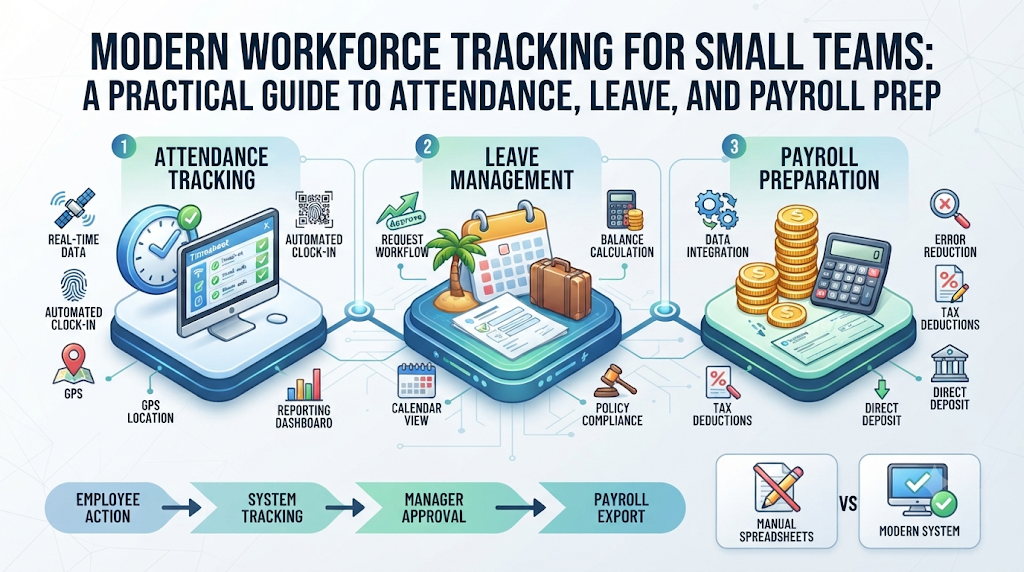
Every growing company reaches a point where manual HR habits slow down the whole team. Founders spend evenings checking attendance sheets, managers lose track of who is on leave next week, and HR teams scramble at month-end to match working days before payroll runs. A unified Attendance and Leave Management System like InOrOff helps small businesses organize daily check-ins, time-off approvals, and monthly summaries in one clear workspace.
This playbook takes an operational look at Employee Attendance Management Software. You will see how daily time logs, leave workflows, PTO balances, and payroll exports work together in plain, everyday terms.
Why Growing Businesses Replace Spreadsheets with Digital Time Tracking
Spreadsheets work fine when five people sit in the same room. Once your headcount grows or schedules become flexible, manual tracking creates daily headaches:
- Gaps in Daily Logs: Staff forget to write down start times, lunch breaks, or end-of-day sign-offs.
- Lost Leave Messages: Time-off requests get buried in group chats, emails, or sticky notes.
- Broken Formulas: One accidental edit in a shared sheet can corrupt monthly hours or leave balances.
- Month-End Bottlenecks: Administrators waste hours double-checking holidays, half-days, and corrections before payroll begins.
Adopting Time and Attendance Software for Small Business operations gives owners, managers, and staff a single reliable record.
Inside Daily Tracking: Employee Check In Check Out Software
At the heart of daily workforce tracking is Employee Check In Check Out Software. Instead of signing a paper register or typing “here” in a chat channel, employees record their start and end times digitally.
Browser Check-Ins and Server-Verified Timestamps
Cloud platforms allow employees to check in and check out directly from a standard web browser. Each action records a server-verified timestamp, helping build an accurate timeline of working hours, breaks, late arrivals, and early exits.
It is important to remember what a timestamp actually shows. A timestamp records when a user clicked check-in or check-out, not physical proof that someone is sitting at a specific desk. Clear expectations and team trust remain essential alongside any digital tool.
Fixing Missed Punches with Correction Workflows
Everyone forgets to click check-out once in a while after a busy client call or late meeting. A structured system lets employees send an attendance correction request with a short reason. Managers or HR administrators then review and approve or reject that update, keeping a clear log of every change.
How an Optional Office IP Attendance System Works
Some companies want office-based staff to log check-ins only while connected to the workplace network. An Office IP Attendance System limits browser check-ins to approved office IP addresses.
- Practical Purpose: It helps confirm that office check-ins happen through the company network.
- Real-World Limits: Internet provider updates, router resets, or approved work-from-home days can block valid check-ins if settings are not updated.
- Privacy Respect: Network IP checks are not GPS tracking or continuous employee surveillance. Companies with hybrid teams should keep rules transparent and flexible.
Managing Time Off with Employee Leave Management Software
Daily attendance records are incomplete without accurate absence data. Vacations, sick days, and half-day appointments directly affect project deadlines and shift coverage. Pairing daily logs with Employee Leave Management Software keeps team availability clear for everyone.
Faster Decisions with Leave Approval Workflow Software
When leave requests sit unread in inboxes, employees cannot finalize travel plans and managers lose visibility. Leave Approval Workflow Software creates a clean, predictable path from request to decision:
- Submit a Request: The employee selects the leave category, dates, and full-day or half-day duration.
- Check Team Overlap: The manager views who else is away during those dates before replying.
- Approve or Reject: The manager records a clear approval or rejection with instant status updates.
- Sync Schedules Automatically: Approved absences update team calendars and deduct days from the employee’s balance.
Setting Clear Rules with PTO Tracking Software
Many modern small businesses combine vacation, personal days, and casual leave into one Paid Time Off (PTO) pool. PTO Tracking Software applies your written leave policy consistently across the team.
Key policy settings to define include:
- Leave Accruals: Decide whether employees receive their annual allowance upfront or earn days gradually each month.
- Half-Day Tracking: Support half-day absences so staff can attend doctor visits or family errands without losing a full day.
- Holiday Exclusions: Ensure public holidays and company off-days are excluded from PTO deductions.
- Carry-Forward and Expiry: Spell out how many unused days roll into the next year and when those days expire.
Because employment regulations vary across countries and states, businesses should always verify that their PTO rules match local labour laws.
Giving Staff Clarity with an Employee Leave Balance Tracker
Repeatedly emailing HR to ask “How many leave days do I have left?” wastes time on both sides. An Employee Leave Balance Tracker displays used, approved, pending, and remaining leave in real time.
When employees see their own numbers clearly, they plan vacations responsibly and HR spends far less time answering routine balance questions.
Paper Registers vs. Integrated Attendance and Leave Systems
Comparing old habits with a centralized digital platform shows where small teams gain back hours each week.
| Operational Area | Paper Logs & Separate Sheets | Integrated Attendance & Leave System |
| Start & End Times | Manual notes or scattered chat messages | Browser check-in and check-out logs |
| Time-Off Requests | Informal texts or buried emails | Structured manager approval workflow |
| Leave Calculations | Error-prone manual spreadsheet math | Live tracking of used, pending, and remaining days |
| Schedule Corrections | Unclear edits with no audit trail | Reviewed correction requests with notes |
| Payroll Handoff | Hours of manual cross-checking | Clean monthly summaries and file exports |
Illustrative Examples from Small Business Operations
The following scenarios are hypothetical examples created to show how these workflows work in practice. They do not represent actual customer data or guaranteed outcomes.
Example 1: Coordinating Half-Day Leave and Team Coverage
Rohan leads an eight-person customer support team. One team member requests a half-day off on Friday afternoon, while another asks for three days of PTO the following week. Using a centralized leave workflow, Rohan checks the team calendar, approves both requests in seconds, and sees updated leave balances immediately—preventing any surprise staffing gaps.
Example 2: Exporting Clean Data with Payroll Ready Attendance Software
Before running monthly payroll for a 20-person studio, the HR coordinator opens Payroll Ready Attendance Software to review the month’s numbers. All pending attendance corrections have been reviewed, public holidays are excluded from leave deductions, and half-day absences are properly logged. The coordinator exports a versioned CSV and PDF summary to hand off to the external payroll team.
Note: Payroll-ready attendance exports simplify data preparation, but they do not perform tax calculations, salary disbursements, or statutory compliance filings.
Common Mistakes That Create HR Friction
Small companies can avoid unnecessary headaches by steering clear of four common traps:
- Approving Leave Verbally Without Logging It: Casual “go ahead” replies lead to forgotten absences and inaccurate leave balances at year-end.
- Overlooking Half-Day Leave Rules: Failing to track half-day time off creates unfairness and skews remaining PTO totals.
- Letting Correction Requests Pile Up: Waiting until the last day of the month to review missed check-outs creates avoidable payroll delays.
- Confusing Attendance Reports with Full Payroll: Attendance exports summarize hours and absences, while final paychecks require proper payroll and tax processing.
Four Best Practices for Small-Business Workforce Tracking
Follow these practical steps to keep your attendance and leave system fair and easy to use:
- Publish a Simple Policy Guide: Explain check-in expectations, break rules, PTO accruals, holiday calendars, and carry-forward limits in plain language.
- Protect Employee Privacy: Restrict attendance and leave records to authorized HR staff, direct managers, and the individual employee.
- Review Requests Weekly: Encourage managers to approve leave requests and attendance corrections every week rather than waiting until month-end.
- Archive Versioned Exports: Keep monthly CSV and PDF attendance summaries organized in secure folders for smooth payroll audits.
How InOrOff Supports Small and Growing Teams
InOrOff is a cloud-based employee attendance and leave management platform built for small and growing businesses. It combines browser-based employee check-in and check-out, server-verified timestamps, working-hour tracking, centralized leave requests, manager approval workflows, and transparent leave balance visibility in one workspace.
Its advertised capabilities also include optional office IP attendance restrictions, PTO and half-day leave tracking, holiday exclusions, leave accrual and carry-forward policies, attendance correction workflows, and monthly attendance summaries with versioned CSV and PDF exports for external payroll processing. Businesses should review how each advertised feature aligns with their internal HR policies and local employment rules before rollout.
Conclusion
Managing employee time and leave does not need complicated enterprise software or endless spreadsheets. When daily check-ins, manager approvals, leave balances, and monthly exports live in one organized system, small teams work with greater clarity and less admin stress.
Start by reviewing your current check-in and leave habits, documenting clear rules for your team, and exploring how a unified attendance and leave platform can streamline your weekly operations.
Frequently Asked Questions (FAQs)
1. What is Employee Attendance Management Software?
It is a digital platform that helps businesses track daily employee attendance, working hours, breaks, late arrivals, and check-in or check-out logs in one organized place.
2. How does Employee Leave Management Software benefit small HR teams?
It keeps leave requests, manager approvals, holiday calendars, and employee leave allowances organized in one system so HR teams do not rely on scattered emails or spreadsheets.
3. Why combine attendance and leave into one Attendance and Leave Management System?
Keeping attendance and leave together ensures that approved vacations or half-days automatically reflect in daily schedules, preventing confusion and duplicate data entry.
4. When should a company adopt Time and Attendance Software for Small Business teams?
As soon as spreadsheets cause missed updates, unclear leave balances, or slow month-end payroll prep, a dedicated small-business system helps restore accuracy and save time.
5. How does Employee Check In Check Out Software work through a web browser?
Employees log in via a web browser to record their check-in and check-out actions, which the platform saves with server-verified timestamps and working-hour totals.
6. How does Leave Approval Workflow Software help managers?
It provides a structured queue where employees submit time-off requests and managers can review team availability, approve or reject requests, and keep records updated automatically.
7. What does PTO Tracking Software manage?
PTO tracking software tracks paid time off according to company rules, covering leave accruals, half-day requests, holiday exclusions, and carry-forward or expiry policies.
8. How does an Office IP Attendance System differ from GPS tracking?
An office IP attendance system only checks whether a browser check-in comes from an approved office network IP address—it does not track continuous physical GPS location.
9. What makes software qualify as Payroll Ready Attendance Software?
It summarizes monthly working hours, approved attendance corrections, and leave records into clean, exportable formats like CSV and PDF files to support external payroll processing.
10. Why do employees value an Employee Leave Balance Tracker?
It gives staff clear self-service visibility into their used, approved, pending, and remaining leave days so they can plan time off without repeatedly asking HR.
11. Can attendance software replace a payroll processor?
No. Attendance software prepares accurate time and absence summaries, whereas salary calculations, tax withholdings, and statutory filings require dedicated payroll processing.
12. How should small businesses protect employee attendance data?
Businesses should use role-based access controls, share clear privacy guidelines with staff, and store exported attendance files securely.