INTRODUCTION
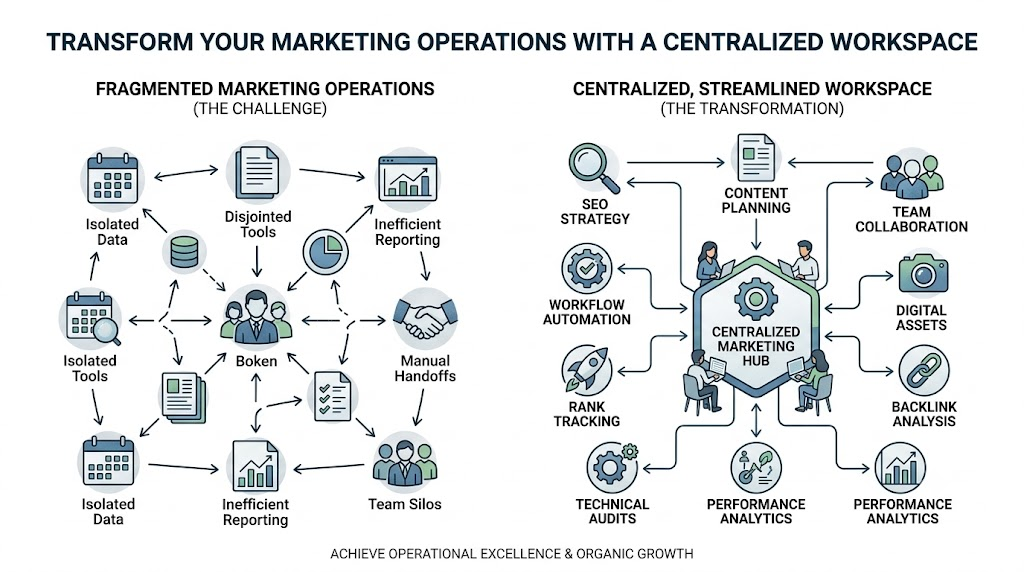
Operating a modern online marketing campaign requires coordinating dozens of moving parts simultaneously. Many growth teams discover that their productivity plummets because they rely on fragmented single-purpose tools. One platform monitors keyword positions, another scans for technical domain errors, a third tracks outreach backlinks, while asset storage and project assignments remain scattered across separate cloud drives and messaging apps. This constant tool-swapping drains creative energy, inflates monthly software expenses, and creates dangerous data gaps between strategists and execution teams. In this deep-dive guide, you will explore how deploying end-to-end SEO software reshapes organic search operations. We will examine core operational areas—including technical auditing, rank tracking, backlink governance, task management, and creator collaborations—and demonstrate how centralized management through platforms like WizBrand empowers teams to dominate competitive search landscapes efficiently.
WHAT IS AN ALL-IN-ONE DIGITAL MARKETING PLATFORM?
An all-in-one digital marketing platform is a centralized operational suite designed to plan, execute, analyze, and scale online marketing initiatives across multiple channels from a single environment. Instead of maintaining disparate software subscriptions, teams utilize a consolidated system to manage every phase of their marketing lifecycle.
Definition
Unlike standalone utilities that solve only one problem (such as rank tracking or media storage), an integrated platform combines technical search diagnostics, project management, digital asset governance, and influencer management into one cohesive workspace.
Core Components
- Search Optimization Engines: Built-in suites for keyword discovery, site health crawling, and backlink analysis.
- Agile Campaign Workflows: Visual task boards, milestone tracking, and task dependencies built specifically for marketing teams.
- Digital Asset Storage: Structured cloud repositories with permission controls and meta-tag searching for media files.
- Outreach & Creator Portals: Centralized communication hubs to locate, manage, and evaluate brand partnerships.
- Unified Intelligence Dashboards: Real-time analytics platforms that gather cross-channel data into clear executive summaries.
Why Businesses Need One
When marketing teams grow, operational friction increases exponentially if tools remain disconnected. Exporting CSV files from one application to re-upload into another wastes hours of high-value strategist time. Centralized platforms remove this inefficiency by serving as a single source of truth for both technical insights and creative execution.
Key Benefits
Switching to an all-in-one digital marketing platform significantly lowers software overhead by consolidating multiple vendor bills into one predictable cost. It accelerates campaign speed, standardizes quality assurance checks, and ensures strategic search insights lead directly to actionable task execution.
SEO MANAGEMENT SOFTWARE
Sustained search engine performance is rarely the result of luck; it stems from rigorous process management and clear task ownership. Enterprise-ready SEO software provides the foundation required to convert raw search data into business growth.
Keyword Research and Clustering
Successful search campaigns begin with understanding search intent. Modern platforms help teams discover relevant query terms, search volumes, competition levels, and user intent patterns. Strategists can assemble these terms into thematic clusters, mapping them directly to site pages or new content briefs.
Campaign Planning and Content Architecture
Once target keyword clusters are defined, marketing managers must structure execution workflows. Integrated SEO management software enables strategists to map keyword groups directly to writers, establish production milestones, and attach optimization requirements directly to active project tickets.
Performance Monitoring and Competitive Intelligence
Search algorithms update constantly, and competitor strategies evolve continuously. Continuous performance tracking allows marketers to measure how on-page changes impact search rankings over time. In addition, competitive intelligence modules help teams identify content gaps and backlink opportunities that competitors are actively leveraging.
Executive and Client Reporting
Creating client reports manually is one of the biggest productivity drains for agency teams. Enterprise systems automate data collection, producing visually compelling performance reports that detail organic visitor trends, rank movements, and overall domain health metrics without manual effort.
SEO RANK TRACKING
Knowing exactly how your landing pages perform on search engine result pages (SERPs) is crucial for measuring optimization success. Utilizing an active SEO rank tracking tool gives strategists clear visibility into ranking movements across dynamic search environments.
Keyword Monitoring and SERP Movement
Automated rank tracking removes the guesswork from search optimization. Marketers can monitor daily rank shifts, detecting early positive momentum or identifying drops caused by search engine algorithm updates. Historical ranking charts provide valuable context, showing whether traffic changes stem from seasonal trends or recent page updates.
Device and Geolocation Tracking
Search results differ drastically depending on user location and device context. Modern position tracking engines allow teams to dissect performance across multiple parameters:
- Desktop vs. Mobile SERPs: Spotting mobile-specific usability issues or ranking discrepancies.
- Hyper-Local Targeting: Tracking rank positions down to specific regions, cities, or postal codes.
- Rich Snippet Features: Tracking visibility across featured snippets, local packs, and knowledge graphs.
Practical Example: E-Commerce Campaign Tracking
Imagine a national athletic apparel brand launching an optimization campaign for “breathable trail running shoes.” Using a specialized SEO rank tracking tool, the team sets up tracking across 75 localized keyword variations on both mobile and desktop devices. When mobile rankings drop in a key regional market, the platform alerts the team immediately, allowing web developers to optimize mobile page loading speeds and structured data schema before major revenue losses occur.
TECHNICAL SEO SITE AUDIT
Even high-quality content cannot achieve top rankings if search engine spiders encounter technical crawl barriers. Regular site crawls using a technical SEO site audit tool ensure your website remains search-engine friendly, fast, and indexable.
Crawl Barriers and Indexation Obstacles
Site audit engines simulate search engine crawlers, scanning every URL on your domain to detect technical problems. They identify HTTP status errors (like 404 broken pages or 500 server crashes), redirect loops, canonical tag conflicts, and accidental noindex rules that prevent valuable pages from showing up in search indexes.
Technical Optimization Checklist
- Broken Hyperlinks: Locate and fix dead internal and external links to preserve crawl efficiency and user trust.
- Content Duplication: Detect thin or identical content blocks that cause keyword cannibalization issues.
- Metadata Coverage: Flag missing, duplicated, or poorly formatted page titles and meta descriptions.
- Mobile Responsiveness: Confirm mobile layout compatibility, touch-target spacing, and proper viewport configurations.
- Page Speed & Core Web Vitals: Evaluate Largest Contentful Paint (LCP), Interaction to Next Paint (INP), and Cumulative Layout Shift (CLS).
- XML Sitemap Validation: Ensure sitemaps are cleanly formatted, free from non-indexable URLs, and properly updated.
By scheduling automated weekly site scans with an enterprise technical SEO site audit tool, webmasters receive immediate alerts when site errors happen, fixing issues before organic traffic suffers.
BACKLINK ANALYSIS
Inbound links from authoritative domains remain one of the most critical off-page signals used by search algorithms to evaluate site authority and trust. Utilizing a dedicated backlink analysis tool allows businesses to build, monitor, and clean their link profiles proactively.
Evaluating Link Profiles and Anchor Text
When building backlinks, quality matters far more than quantity. A robust backlink profile consists of contextually relevant links coming from diverse, high-trust referring websites. Analyzing anchor text distribution ensures your profile maintains a natural blend of branded, generic, and long-tail anchor phrases, preventing algorithm penalties.
Toxic Link Detection and Competitor Gap Analysis
Spam campaigns or outdated SEO tactics can generate toxic inbound links that hurt domain authority. Regular backlink audits help identify suspicious referring domains so webmasters can compile disavow files quickly. Additionally, dissecting competitor link profiles surfaces high-value link prospects, including industry directories, guest publication platforms, and unlinked brand mentions.
Using an advanced backlink analysis tool simplifies link intelligence, turning raw backlink data into actionable outreach targets for digital PR teams.
SEO PROJECT MANAGEMENT
Executing modern search campaigns requires clear coordination among strategists, content writers, UX designers, and web developers. Relying on dedicated SEO project management software connects high-level search strategy directly to daily task execution.
Task Allocation and Campaign Milestones
Generic project management tools lack the specific context required for complex search initiatives. Industry-specific task management systems offer built-in project templates for technical site audits, content optimization sprints, and site migration sequences.
Workflow Monitoring and Team Velocity
Centralizing marketing tasks inside a single workspace ensures that every task connects directly to an organic search objective. Team leaders can review project velocity, monitor approaching deadlines, assign subtasks, and track progress using customizable Kanban boards or Gantt timelines.
Integrating strategy with task tracking using customized SEO project management software eliminates communication gaps and ensures technical recommendations are completed on time.
DIGITAL MARKETING WORKFLOW MANAGEMENT
Achieving predictable growth in online marketing requires repeatable operational processes. Implementing digital marketing workflow management software standardizes production stages, eliminates approval delays, and maintains high quality across campaign deliverables.
Campaign Hand-offs and Team Alignment
A typical content production cycle involves multiple hand-offs: search strategists identify target keywords, copywriters produce drafts, graphic designers create visual assets, editors refine brand voice, and web developers publish the page. Without structured workflow management, hand-offs get lost in email chains or instant messages.
Process Automation and Quality Control
Workflow management software automates task assignments, status updates, and notification alerts as deliverables move through production pipelines. By establishing mandatory quality gates—such as verifying meta tag guidelines before a draft moves to design—teams uphold rigorous standards while speeding up campaign delivery. Implementing specialized digital marketing workflow management software helps organizations scale production output without sacrificing search quality.
DIGITAL ASSET MANAGEMENT
Modern marketing campaigns require extensive visual collections, including infographics, custom illustrations, video clips, whitepapers, and promotional banners. Using dedicated digital asset management software for marketing teams eliminates file organization problems across decentralized organizations.
Centralized Asset Search and Organization
Searching through disorganized local folders for the right image or logo wastes valuable creative time. Centralized asset repositories utilize tag-based search systems, category taxonomies, and meta descriptions to make every digital asset searchable in seconds.
Version Control and Usage Permissions
Publishing outdated product graphics or unapproved brand logos damages brand trust and can cause compliance issues. Purpose-built digital asset management software for marketing teams maintains clear version histories, ensuring team members always use approved assets. Fine-grained access permissions let administrators share files securely with internal staff, freelance partners, or agency clients.
INFLUENCER MARKETING
Digital PR and influencer partnerships play a crucial role in modern content distribution and high-authority link acquisition. Leveraging an integrated influencer marketing marketplace connects businesses with vetted content creators to expand brand reach.
Discovering Influencers and Managing Campaigns
Finding relevant brand ambassadors requires analyzing creator engagement rates, audience demographics, and niche alignment. Integrated creator marketplaces let campaign managers search vetted influencer databases, submit campaign proposals, negotiate terms, and track content deliverables inside one dashboard.
Collaboration and ROI Tracking
Managing creator partnerships within a centralized portal provides full visibility into budget spending, contractual deliverables, and publish schedules. Marketers can measure referral traffic, social engagement, and backlink impact in real time through an influencer marketing marketplace, connecting creator investments directly to key business metrics.
WHO SHOULD USE WIZBRAND?
WizBrand provides a flexible operational hub designed to solve workflow challenges across various business models and marketing roles.
SEO Agencies
Agencies can manage client portfolios efficiently using centralized client workspaces, automated rank reporting, technical site audits, and white-label performance dashboards to improve profit margins.
Digital Marketing Agencies
Full-service marketing agencies benefit from unified project management, digital asset storage, and cross-channel tracking that connects search optimization, content production, and influencer outreach.
Freelancers
Independent search consultants can deliver professional site audits, rank reports, and content plans without paying for multiple expensive software subscriptions.
In-House Marketing Teams
Internal marketing departments gain a single source of truth that simplifies collaboration between search strategists, content creators, graphic designers, and web developers.
Enterprises
Large organizations leverage enterprise security permissions, multi-site project tracking, and scalable asset storage to manage multi-brand web properties easily.
Startups
Growing businesses can launch structured, search-focused growth campaigns rapidly using guided workflows without high software overhead.
Content Teams
Writers and content managers use integrated keyword insights and media asset libraries to write, optimize, and publish high-ranking articles efficiently.
E-commerce Businesses
Online store owners can monitor product page positions across regional markets while running automated technical site scans to catch broken pages or crawl errors.
Influencers
Digital creators access brand portals to discover sponsorship deals, upload creative deliverables for review, and establish long-term brand relationships.
Advertisers
Performance marketers gain clear visibility over promotional ad assets, landing page performance metrics, and overall workflow velocity across campaigns.
MANAGING MULTIPLE TOOLS VS. AN ALL-IN-ONE PLATFORM
Relying on scattered single-purpose tools creates hidden productivity losses that limit team efficiency and increase software expenses.
| Operational Area | Fragmented Point Tools | Consolidated WizBrand Ecosystem |
| Rank Tracking | Disconnected dashboard; manual CSV exports | Position tracking tied directly to active project tasks |
| Project Management | Generic task board; lacks built-in search context | Marketing workflows built around search metrics |
| Backlink Monitoring | Isolated third-party utility | Integrated link audits connected to outreach tasks |
| Asset Management | Unorganized cloud folders; lost media files | Tagged asset storage with strict version control |
| Client Reporting | Time-consuming manual spreadsheet assembly | Automated real-time performance reports |
| Team Communication | Scattered across emails, chats, and comments | Contextual task commentary inside campaign boards |
Advantages of Integration
Switching to an all-in-one ecosystem eliminates context-switching—the loss of focus that occurs when employees jump between different applications continuously. Consolidating your software stack improves execution speed while cutting redundant subscription costs.
BUSINESS BENEFITS OF USING WIZBRAND
Adopting an integrated digital marketing platform provides significant business advantages across operational areas:
- Higher Operational Efficiency: Automated task updates and standardized project boards save marketing teams hours of manual administrative work every week.
- Unified Campaign Workflows: Search strategy, content creation, asset governance, and performance analytics operate inside one environment.
- Faster Team Collaboration: In-app file sharing and task assignments resolve approval bottlenecks among design, editorial, and technical teams.
- Sustained Search Visibility: Continuous technical auditing, daily position tracking, and link monitoring protect and grow organic search traffic.
- Lower Software Expenses: Replacing multiple single-purpose subscriptions with a single platform subscription reduces overall MarTech spend.
- Data-Driven Strategy Execution: Real-time analytics dashboards provide actionable insights, connecting search performance directly to revenue goals.
BEST PRACTICES FOR SEO & DIGITAL MARKETING MANAGEMENT
Achieving and maintaining top search engine rankings requires consistent execution and adherence to structured operational practices.
1. Monitor Keyword Positions Regularly
Track primary keyword movements daily to detect algorithmic volatility early. Evaluate desktop and mobile search rankings across target local markets to ensure comprehensive coverage.
2. Schedule Weekly Technical Audits
Automate technical site crawls every week. Fix status code errors, broken internal links, and page loading speed issues before they degrade user experience or search rankings.
3. Maintain Digital Asset Governance
Establish clear file naming standards and tag metadata across all marketing visuals. Ensure creative teams archive outdated graphics promptly to prevent brand inconsistency.
4. Monitor and Protect Backlink Profiles
Conduct monthly link audits to catch toxic link placements early. Keep an updated disavow list and reach out to convert unlinked brand mentions into valuable backlinks.
5. Standardize Production Workflows
Establish clear standard operating procedures for every campaign type. Require mandatory optimization checks—such as meta tag verification, alt text checks, and schema testing—before publishing content.
6. Review Analytics and Optimize Continuously
Regularly review campaign reports against core business targets. Refine content schedules using real-time insights gathered from analytics and performance monitoring systems.
COMMON DIGITAL MARKETING MISTAKES
Avoiding common operational pitfalls is critical for maximizing organic search return on investment.
Neglecting Technical Site Health
Focusing entirely on writing content while ignoring crawl errors, page load speeds, or indexing issues is a costly mistake. Technical errors prevent search engines from ranking even the best written content.
- Solution: Automate weekly site audits and assign technical fixes directly to web developers.
Operating Without Structured Workflows
Managing campaigns through informal chat messages and email threads leads to forgotten tasks and missed publishing deadlines.
- Solution: Mandate that all marketing deliverables move through a structured visual project board with clear task owners and target dates.
Disorganized Media Asset Repositories
Storing brand graphics across individual desktop drives leads to lost assets and inconsistent brand presentation.
- Solution: Implement a central digital asset management system with permission controls and tag-based searching.
Relying on Infrequent Manual Reporting
Collecting campaign data only when monthly client reports are due prevents teams from making timely optimization decisions.
- Solution: Use automated live dashboards that monitor ranking shifts and domain health continuously.
FUTURE OF SEO & DIGITAL MARKETING PLATFORMS
The search engine marketing landscape evolves constantly. Staying ahead requires understanding emerging trends that are transforming how marketing teams operate.
AI-Driven Search Optimization
Artificial intelligence and machine learning continue to change how search engines evaluate content quality and user intent. Modern platforms are incorporating smart algorithms to assist with keyword clustering, search intent analysis, and predictive rank forecasting.
Automated Process Workflows
Future marketing systems will place greater focus on process automation. Automated alerts will generate developer tickets for technical fixes, trigger outreach sequences when backlinks break, and adjust content briefs dynamically based on SERP shifts.
Integrated Multi-Channel Attribution
As search engine results pages evolve to show AI summaries, video feeds, and interactive shopping panels, analytics suites are shifting toward unified attribution models that measure impact across search, content, and creator channels.
HOW WIZBRAND HELPS MARKETING TEAMS GROW
WizBrand enables growth-focused businesses to overcome tool fragmentation and scale organic visibility effectively:
- SEO Management: Combines keyword research, content planning, and competitive analysis into a unified strategy portal.
- Rank Tracking: Delivers daily position monitoring across geographic locations and device types.
- Site Audits: Crawls web properties automatically to highlight technical site errors, speed issues, and indexation obstacles.
- Backlink Monitoring: Provides complete visibility into domain link profiles, helping teams remove toxic links and find new link prospects.
- Workflow Management: Connects project planning, task assignments, and editorial schedules within one visual workspace.
- Asset Management: Centralizes media storage, brand assets, and video content for instant discovery and version control.
- Influencer Collaboration: Connects brands with content creators through a structured marketplace to scale digital PR and link acquisition.
- Reporting & Analytics: Generates automated visual reports in seconds, showcasing organic growth and campaign performance clearly.
FREQUENTLY ASKED QUESTIONS (FAQ)
What is an all-in-one digital marketing platform?
An all-in-one digital marketing platform is a centralized software ecosystem that consolidates core marketing operations—such as keyword research, rank tracking, technical auditing, backlink analysis, project management, and asset storage—into a single interface. Consolidating these tools eliminates data silos, lowers subscription expenses, streamlines team collaboration, and speeds up campaign execution.
What is SEO management software?
SEO management software is an integrated application designed to help digital marketers plan, execute, monitor, and optimize search engine strategies. It includes tools for keyword research, campaign planning, performance monitoring, competitor analysis, and automated reporting. This software helps teams convert raw search data into actionable tasks to grow organic visibility across domains.
How does an SEO rank tracking tool work?
An SEO rank tracking tool monitors the exact position of website pages on search engine results pages (SERPs) for target keywords. The tracking engine queries search results daily across various geographic locations, device types (mobile and desktop), and search features, charting position changes over time to evaluate optimization impact.
Why are technical SEO audits important?
Technical SEO audits are essential because they identify underlying site errors that prevent search engine spiders from crawling and indexing web pages effectively. Audits uncover broken hyperlinks, crawl errors, duplicate content, improper metadata, slow page speeds, and mobile usability issues. Resolving these technical flaws ensures search engines index and rank content properly.
What is backlink analysis?
Backlink analysis is the process of inspecting external incoming links that point to your website. Analyzing a backlink profile allows marketers to evaluate domain authority, review anchor text diversity, identify spammy toxic links, and discover high-value link opportunities by analyzing competitor referring domains.
How does SEO project management improve productivity?
SEO project management improves productivity by organizing complex search strategies into structured, actionable tasks. Assigning explicit task owners, deadlines, and dependencies for technical fixes, content updates, and outreach campaigns keeps team members accountable, prevents communication breakdowns, and ensures projects stay on schedule.
What is digital asset management?
Digital asset management (DAM) is a centralized system for storing, organizing, searching, and sharing media files—such as graphics, photos, video clips, brand logos, and marketing collateral. DAM software provides tag-based searchability, version control, and permission management, keeping creative files secure and accessible.
What is an influencer marketing marketplace?
An influencer marketing marketplace is an integrated network connecting brands directly with content creators, bloggers, and social influencers. It streamlines digital PR campaigns by providing tools to search creator databases, negotiate campaign terms, review creative deliverables, track performance metrics, and build long-term brand partnerships.
Is WizBrand suitable for agencies?
Yes, WizBrand is engineered specifically to streamline agency workflows across client portfolios. Agencies can manage dozens of client accounts within a single workspace, standardizing technical audits, position tracking, digital asset libraries, and project task boards while generating automated visual client reports.
How can businesses improve SEO workflows?
Businesses can improve SEO workflows by unifying campaign planning and execution tools inside one platform. Establishing clear operating procedures—such as requiring automated technical audit checks, keyword mapping validation, and structured editorial reviews before publishing—eliminates approval delays and maintains high optimization standards across deliverables.
CONCLUSION
Relying on scattered single-purpose applications creates unnecessary operational friction, inflates MarTech expenses, and damages organic search performance. To stay competitive in today’s search engine landscape, growth-driven businesses, agencies, and content teams need unified operational systems that bridge the gap between strategic research and daily task execution. Deploying a comprehensive system centered on complete SEO software transforms complex search strategies into streamlined, repeatable processes. From tracking daily keyword positions and running technical site audits to evaluating backlink profiles and centralizing digital assets, an integrated workspace provides the structure necessary to scale organic traffic predictably.