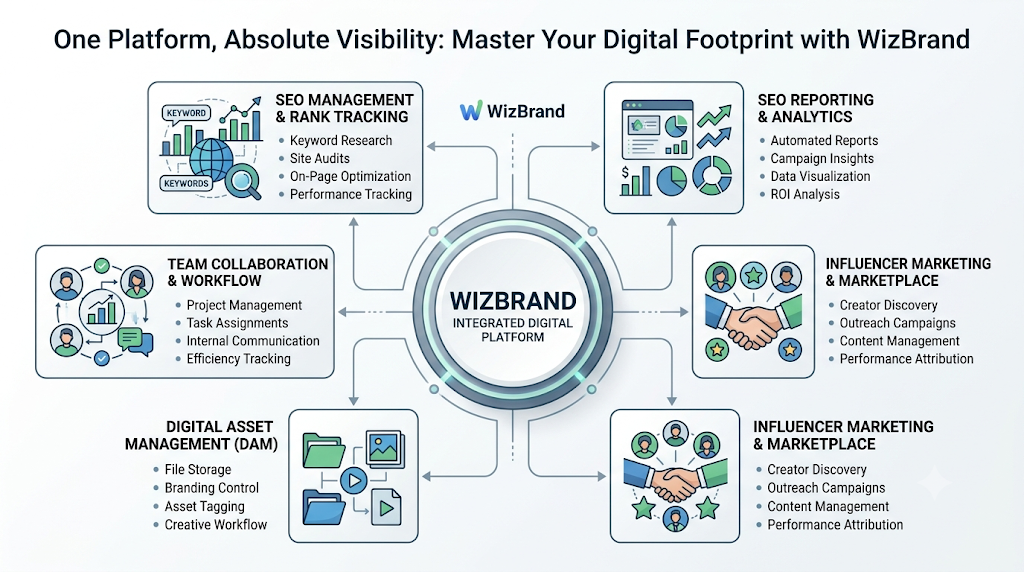
In the fast-evolving digital marketplace, managing a brand’s online visibility can quickly become chaotic. Marketers frequently find themselves trapped in a cycle of tool fatigue, jumping between disconnected applications for keyword research, backlink tracking, and social monitoring. This fragmented approach scatters critical data, lowers productivity, and obscures the clear insights needed to drive growth. Switching to an all in one SEO platform changes everything by consolidating your entire toolkit into a single, cohesive ecosystem. Instead of wrestling with multiple subscriptions and mismatched metrics, marketing teams gain a unified dashboard that connects technical search optimization with broader campaign management. Platforms like WizBrand provide this exact synergy, bringing together comprehensive search tracking, influencer discovery, and asset control. Let’s dive deep into the tangible benefits of making the switch to a centralized system and explore how it can transform your business growth.
What Is an All in One SEO Platform?
An all in one SEO platform is a centralized software ecosystem designed to handle every facet of search engine optimization and digital visibility from a single interface. Rather than focusing strictly on one isolated task, such as technical audits or backlink monitoring, it integrates multiple operational modules. This structural unity ensures that data flows naturally between keyword research tools, live index checkers, and reporting engines.
Modern marketing strategies demand more than traditional search tactics, which is why next-generation platforms expand their scope. They incorporate cross-functional tools like an influencer marketplace and specialized digital asset organization. By merging search tracking with campaign collaboration, these environments allow search engine optimization professionals, content creators, and brand managers to work synchronously without data silos.
The Strategic Importance of Centralized Marketing Workflows
Centralization is the foundational pillar of modern digital marketing efficiency. When operational data is spread across isolated platforms, teams waste valuable hours exporting CSV files, cleaning up redundant records, and manually reconciling conflicting numbers. A centralized marketing workflow eliminates this friction, providing a single source of truth that ensures everyone works with identical real-time numbers.
Furthermore, unified workflows make it simple to see how different marketing channels affect one another. For example, tracking how a sudden spike in search presence correlates with a live creator campaign helps teams measure the compounding value of their marketing investments. This integrated view empowers managers to allocate budgets intelligently, scale winning tactics quickly, and keep day-to-day operations aligned with high-level business goals.
10 Major Benefits of Centralizing Your SEO Toolkit
1. Drastic Reduction in Tool Fatigue
Jumping between individual software solutions wastes time and clouds your strategic focus. A single platform eliminates the hassle of maintaining dozens of passwords, learning different user interfaces, and managing multiple billing cycles.
2. Single Source of Truth for Data
When your rank tracking tool, backlink analysis, and technical audit data live in one place, discrepancies disappear. Your team can make confident, data-driven decisions using unified metrics.
3. Accelerated Team Collaboration
Centralized spaces break down organizational barriers. Content writers, SEO experts, and campaign managers can view the same dashboards, leave direct notes, and coordinate strategies instantly.
4. Seamless Workflow Automation
Automating recurring tasks—like scheduling weekly site crawls or tracking daily keyword shifts—saves hours of manual labor. This frees up your marketing team to focus on strategic growth.
5. Consolidated Marketing Costs
Paying for separate software for rank tracking, influencer discovery, and asset storage strains budgets. Consolidating into one system significantly lowers software expenses.
6. Comprehensive SEO Reporting Software
An integrated platform allows you to build comprehensive, multi-channel reports in minutes. You can easily showcase keyword improvements alongside live content performance.
7. Integrated Influencer Marketing Platform Capabilities
Modern visibility relies heavily on social proof. Combining search optimization with an influencer marketplace helps brands manage creator partnerships and track their direct impact on search demand.
8. Efficient Digital Asset Management Software
High-performance campaigns require fast access to approved creative assets. Built-in marketing asset management software ensures optimized images, templates, and banners are always organized and ready.
9. Real-Time SERP Visibility Tracking
Search landscapes change rapidly. Real-time rank tracking ensures teams catch algorithmic shifts early, allowing them to adjust content strategies before traffic drops.
10. Enhanced Scale for Agencies
For growing teams, managing multiple client accounts across fractured tools is unsustainable. Scalable platforms provide the structure needed to manage multiple brands efficiently under one roof.
Feature Comparison: Making the Operational Switch
To understand the practical impact of modernizing your marketing toolkit, let’s examine how traditional, manual, and disconnected workflows stack up against unified software solutions.
Table 1: Traditional SEO Tools vs. All-in-One SEO Platform
| Feature | Traditional SEO Tools | All-in-One SEO Platform |
| Data Integration | Isolated; requires manual data exporting and cleaning. | Seamless; cross-tool modules share live metrics instantly. |
| Operational Scope | Focuses solely on search data (keywords, links). | Connects search data with creators and asset libraries. |
| Workflow Efficiency | Low; teams must jump between multiple browser tabs. | High; centralized environment streamlines daily tasks. |
| Cost Structure | Multiple costly subscriptions that drain budgets. | Single predictable license with lower overhead. |
| Best Choice | Freelancers managing simple, single-focus projects. | Agencies and brands seeking scalable, efficient growth. |
Table 2: Manual SEO Management vs. SEO Management Software
| Feature | Manual SEO Management | SEO Management Software |
| Tracking Accuracy | Prone to human error and outdated spreadsheet entries. | Precise, automated collection from live search engines. |
| Reporting Speed | Hours spent building weekly client reports manually. | Instant, automated scheduling and white-label generation. |
| Alert Systems | Critical bugs are missed until traffic drops significantly. | Immediate automated alerts for drops or crawl errors. |
| Scalability | Extremely limited; capped by available manual hours. | Highly scalable; handles hundreds of campaigns easily. |
| Best Choice | Early-stage personal blogs with zero operational budget. | Growing business teams and professional digital agencies. |
Table 3: In-House Influencer Management vs. Influencer Marketing Platform
| Feature | In-House Influencer Management | Influencer Marketing Platform |
| Creator Discovery | Hours spent browsing social media feeds manually. | Searchable marketplace with data-driven filters. |
| Campaign Workflow | Scattered across email chains and chat apps. | Centralized campaign pipelines and progress tracking. |
| Asset Collection | Chaotic file transfers via various cloud links. | Integrated library for structured asset collection. |
| Performance Tracking | Reliance on self-reported screenshots from creators. | Verified data tracking and clear ROI attribution. |
| Best Choice | Hyper-local brands running small, occasional test campaigns. | Modern brands running scalable influencer programs. |
Interactive Marketing Optimization Visualizer
To see how adjusting your core marketing variables directly impacts organic traffic and overall campaign efficiency, interact with the calculator below.
Real-World Business Use Cases
Digital Marketing Agencies Scaling Client Onboarding
Imagine a busy agency onboarding five new clients simultaneously. Using individual point solutions, account managers would spend days setting up independent projects across various rank trackers, backlink auditors, and reporting tools.
With comprehensive SEO software for agencies, the team can create a unified workspace for each client in minutes. Because keyword tracking, site audits, and automatic client report delivery live in one system, agencies can onboard clients faster and handle larger accounts without hiring more staff.
E-Commerce Brands Syncing Content with Creator Campaigns
An online retail brand launching a seasonal apparel line needs its product pages to rank high on Google while simultaneously running an outreach campaign with fifty fashion creators.
[Influencer Discovery] ➔ [Content Generation] ➔ [Asset Optimization] ➔ [SERP Tracking]
Using an integrated influencer campaign management software ecosystem, the brand can discover partners, approve promotional assets, and track how influencer-driven search demand raises keyword rankings on the SERPs—all from a single control center.
Common Digital Marketing Mistakes to Avoid
- Relying on Fragmented Toolsets: Using disparate programs causes data gaps, creates billing headaches, and leads to misaligned marketing teams.
- Neglecting Integrated Asset Security: Storing high-value creative files on unorganized personal cloud drives often leads to lost assets and slowed campaign rollouts.
- Manual Report Creation: Spending hours building reports by hand steals time from creative planning and strategic execution.
- Ignoring Local Search Variations: Tracking search rankings broadly without checking localized ZIP-code data results in highly inaccurate performance insights.
- Operating in Product Silos: Keeping your optimization team isolated from your creator outreach team prevents your business from running cohesive, multi-channel campaigns.
Actionable Best Practices for Modern Marketing Teams
- Audit Your Software Stack Quarterly: Identify and cancel redundant software subscriptions to keep your toolkit lean and cost-effective.
- Automate Your Search Reporting: Set up weekly, automated performance reports to keep stakeholders informed without manual effort.
- Organize a Clean Asset Library: Group your marketing collateral by campaign, platform, and usage rights within your digital asset management software.
- Connect Creator Content with Target Keywords: Encourage influencer partners to naturally use your primary search terms in their captions and video descriptions to amplify search impact.
- Run Automated Site Audits Weekly: Set up automated technical health checks to catch broken links, slow pages, and crawl errors before they hurt your search engine rankings.
Expert Insights for Advanced Competitiveness
“The future of search optimization relies on cross-functional agility,” states a veteran digital strategist. “Search engine algorithms are increasingly prioritizing genuine user signals and brand authority. By combining real-time keyword tracking with targeted creator campaigns, brands create a powerful flywheel effect: social proof drives search demand, and strong search positions capture that high-intent traffic.”
To maintain a competitive edge, teams must move away from isolated optimization tactics. Instead, use advanced platforms to connect your link-building efforts, influencer collaborations, and technical site updates into a single cohesive strategy.
Why Choose WizBrand?
WizBrand stands out as an elite all in one SEO platform built specifically to streamline complex digital marketing workflows. By combining powerful search engine optimization tools with a built-in influencer marketplace and robust marketing asset management software, WizBrand removes the friction of running multi-channel campaigns.
Whether you are an enterprise team looking to automate complex workflows or an agency looking for reliable SEO reporting software, WizBrand provides the scalability and deep insights you need. It helps businesses reduce software overhead, break down team silos, and confidently scale their online footprint.
Frequently Asked Questions
What is the primary benefit of using an all in one SEO platform?
The primary benefit is consolidation. It eliminates tool fatigue by combining rank tracking, site auditing, and campaign analytics into one dashboard, ensuring data consistency across your team.
How does SEO reporting software save marketing teams time?
It automates data collection and turns metrics into presentation-ready reports. This saves teams from spending hours manually copy-pasting numbers into spreadsheets every week.
Can small businesses benefit from enterprise-grade SEO management software?
Yes, it helps small businesses compete effectively. Centralizing data lets small teams operate efficiently, automate tedious tasks, and pick high-value keywords without wasting budget.
What makes an influencer marketplace useful for search optimization?
It helps you find creators who generate social proof and brand mentions. These collaborations drive brand searches, which naturally signal authority to search engines.
How does digital asset management software improve active campaigns?
It keeps your creative files organized, searchable, and secure. This ensures teams can find and deploy approved images and videos quickly without production delays.
What is a rank tracking tool used for?
It monitors your website’s positions for specific keywords over time. This helps you understand how algorithm updates and optimization efforts impact your visibility.
Why should marketing asset management software include access controls?
Access controls protect your brand’s assets. They ensure only authorized team members or external partners can view, edit, or publish your high-value creative files.
How does an influencer campaign management software system track ROI?
It tracks custom links, usage rights, and performance metrics across campaigns. This makes it easy to see exactly how much revenue and traffic each creator generates.
What is the difference between general cloud storage and digital asset software?
Cloud storage simply holds files in basic folders. Digital asset software adds advanced metadata, usage tracking, and smooth workflows designed specifically for marketing teams.
How often should our team check our rank tracking tool metrics?
Review your rankings weekly for general trends, but keep automated alerts active daily so you can respond instantly to sudden algorithm shifts or technical indexing issues.
Can SEO software for agencies handle multi-client account management?
Yes. Professional agency software includes multi-tenant workspaces. This allows your team to manage distinct clients securely without mixing data or access permissions.
What technical features should be included in an all in one SEO platform?
A complete platform should provide real-time rank tracking, backlink analysis, comprehensive site auditing, keyword discovery, and deep competitor analysis tools.
How do automated marketing workflows boost overall team productivity?
Automating repetitive tasks like reporting and data gathering frees up your team’s schedule. This lets them focus on strategic planning and creating high-impact content.
Why are historical keyword metrics valuable for planning future content?
Historical data reveals long-term search trends and seasonal shifts. This insight allows your team to create and publish content exactly when user interest peaks.
How does centralized data security help digital marketing agencies?
It ensures client data, access keys, and campaign strategies are stored safely in one secure environment, lowering the risk of data leaks from scattered apps.
Conclusion
Managing modern digital marketing across separate, isolated tools often leads to operational friction, scattered data, and wasted budget. Transitioning to a unified SEO management software platform allows businesses to break down data silos, reduce tool fatigue, and automate time-consuming reporting tasks. Centralizing your search optimization, creator collaborations, and creative assets gives your team the clear visibility needed to make smart, data-driven decisions. As search algorithms continue to evolve, staying agile is essential. Embracing a comprehensive platform gives your business the structure and insights needed to build long-term topical authority, improve search engine rankings, and drive sustainable growth.