Introduction
Imagine water traveling through pipes into your kitchen sink. If a pipe leaks, gets clogged, or brings dirty water, you cannot cook or drink safely. Data pipelines work the exact same way inside modern computer systems. They collect digital information from many different places, clean it up, and send it to decision-makers. When those pipelines break or deliver incorrect numbers, businesses make bad choices.
This is where DataOps saves the day. DataOps brings together smart working habits, automated testing, and helpful software so information moves smoothly and without errors. Educational platforms like TheDataOps.org help curious learners and engineering teams discover how to set up reliable systems that deliver clean, dependable insights every single day.
What Is DataOps and Why Does It Matter
DataOps is a team practice designed to improve the quality and delivery speed of data. Think of it like a pit crew in car racing. Instead of one person changing all four tires, an organized crew uses the right tools and coordinated steps to get the car back on the track in seconds.
In many companies, data engineers, software developers, and business analysts work separately. This separation causes long delays and misunderstandings whenever someone needs a new report. DataOps brings these groups together so they can design, test, and release data pipelines collaboratively.
The Problem With Old Manual Pipelines
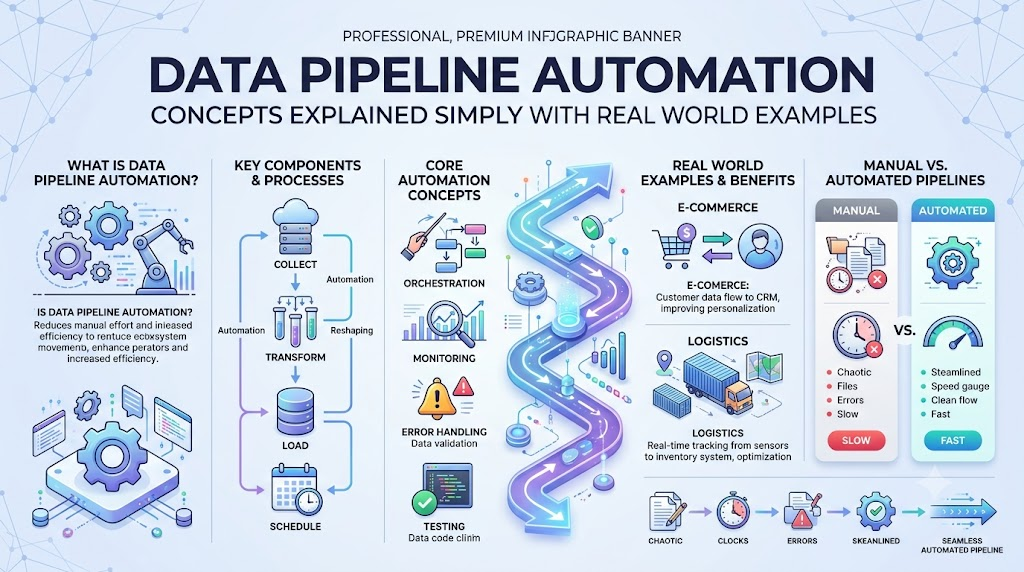
Years ago, engineers moved data by manually typing commands or running isolated scripts late at night. When an unexpected error happened, such as a missing date or a misspelled country name, the whole script stopped working. Finding that small mistake often took days of looking line by line through massive spreadsheets.
How Automation Changes the Daily Workflow
Data pipeline automation replaces slow, manual chores with automated software checks. When new files arrive, automated systems check the columns, confirm that no rows are missing, and move the data forward automatically. If a file contains bad values, the system flags it instantly before it reaches important business dashboards.
Core Pillars of Modern Data Operations
To build a reliable data delivery system, teams rely on three central ideas: automated testing, continuous integration, and total observability. Working with a modern DataOps platform helps engineers connect these three pieces into one smooth assembly line.
+--------------------------------------------------------------------+
|                      THE THREE DATAOPS PILLARS                     |
+------------------------------------+-------------------------------+
| Pillar Name                        | Primary Role in the Pipeline  |
+------------------------------------+-------------------------------+
| Continuous Integration (CI/CD)     | Tests code changes instantly  |
| Data Quality Management            | Validates incoming values     |
| Data Observability                 | Watches live pipeline health  |
+------------------------------------+-------------------------------+
Continuous integration means every time an engineer writes code to transform data, an automated system checks whether the code works properly. Data quality management ensures that incoming records match rules, such as verifying prices are never negative. Finally, data observability acts like a heart monitor, watching the entire pipeline to verify data arrives on time.
Automated Testing for Data Pipelines
Automated tests act like safety inspectors in a toy factory. Before a toy goes into a box, machines check if the parts fit tightly. In data engineering, automated tests run checks on incoming files:
- Confirming required fields like customer IDs exist
- Checking that values fall within acceptable ranges
- Checking for duplicate records
- Ensuring timestamps follow standard formats
Data Observability Versus Basic Data Quality
Data quality tells you whether the data itself is clean and accurate right now. Data observability looks at the bigger picture across the entire pipeline. It monitors whether jobs are taking longer than usual, whether row counts suddenly dropped by half, and whether downstream systems are receiving updates as expected.
| Feature Area | Basic Data Quality | Comprehensive Data Observability |
| Main Focus | Row and column values | System health, lineage, and pipeline speed |
| Detection Method | Rule-based value checks | Anomaly detection and historical tracking |
| Timing | During data validation | Continuous across all pipeline stages |
| Key Question | “Is this number correct?” | “Where did this break and why is it slow?” |
Important Tools in the DataOps Ecosystem
Modern teams use specialized tools to keep their information flowing without hiccups. Knowing which tool performs each task helps engineers build durable pipelines.
- Apache Airflow: Acts like a train station manager, scheduling when data jobs run and making sure one task finishes before the next one starts.
- Apache Kafka: Works like a real-time messaging conveyor belt, moving streaming messages rapidly from one system to another.
- Apache Spark: Functions like a superfast calculator that crunches giant files across multiple computers at the same time.
- Kubernetes: Manages containers so your data processing jobs have the exact computing power they need to run without crashing.
- Jenkins: Automates the testing and building of data transformation code whenever an engineer makes an update.
- Grafana: Displays visual dashboards that track memory, processing times, and error rates across the entire environment.
Real-World Applications Across Industries
Data operations help real companies solve daily problems across different fields. When teams automate their data operations, both technical teams and everyday customers benefit from accurate information.
Hospital Health Systems
Hospitals collect patient records, lab test results, and room availability data from dozens of internal systems. A broken data pipeline could delay critical treatment information. By applying pipeline automation and strict validation, doctors receive accurate medical test charts right when they need them.
Retail Inventory Tracking
Big online stores must know how many shirts, shoes, or books remain in their warehouses. If inventory counts lag by six hours, a store might sell items it does not actually have in stock. Automated pipelines process purchase events continuously so warehouse systems and websites show matching quantities.
Common Challenges When Adopting DataOps
Switching from manual workflows to automated systems requires patience and practice. Teams often face a few common roadblocks when getting started.
- Siloed Communication: Data analysts and software engineers often use different terminology, which leads to confusion about requirements.
- Legacy Tools: Older databases may not easily connect to modern CI/CD software or pipeline orchestration engines.
- Inconsistent Data Formats: Different departments often save identical information using different structures, such as writing dates as day-month-year instead of year-month-day.
- Lack of Specialized Skills: Building automated pipelines requires knowledge across software engineering, cloud platforms, and data analysis.
Many organizations consult specialized resources or seek DataOps consulting guidance to help their staff modernize legacy systems without causing downtime.
Career Path of a DataOps Engineer
Because reliable data is critical for decision-making, the demand for skilled technical professionals continues to expand. Becoming a DataOps engineer offers an exciting path for learners who enjoy both software operations and data analysis.
Core Skills You Need
- Programming: Writing clean code in languages like Python or SQL to extract, clean, and reshape information.
- Pipeline Orchestration: Building directed workflows using tools like Apache Airflow to schedule and manage jobs.
- Cloud Platforms: Hosting data storage buckets, virtual servers, and serverless tasks across cloud environments.
- Version Control: Using Git to track code changes, collaborate with colleagues, and roll back errors safely.
- Quality Assurance: Designing automated test suites that catch malformed files before they reach business reports.
Enrolling in a structured DataOps course or preparing for an official DataOps certification provides hands-on practice with enterprise tools. Dedicated platforms such as TheDataOps.org offer structured DataOps training modules, documentation, and conceptual roadmaps to help beginners build practical competence step by step.
FAQs
What is the difference between DevOps and DataOps?
DevOps focuses on building, testing, and releasing software code quickly and safely.
DataOps borrows these same automation habits and applies them specifically to data pipelines, data models, and database systems. While DevOps mainly manages code, DataOps must manage both code and unpredictable changing data.
Why is data pipeline automation so important?
Automating a pipeline removes the risk of human typing mistakes and processes data around the clock.
Instead of waiting for an engineer to run an export script by hand, automated systems start processing files the instant they land in storage, catching errors immediately.
What does a DataOps platform do for an organization?
A DataOps platform provides a unified environment to build, run, test, and observe data pipelines.
It lets engineers schedule jobs, manage dependencies, run data validation tests, and see where bottlenecks occur without juggling separate disconnected tools.
How does data observability prevent business mistakes?
Observability monitors trends in pipeline runs, such as sudden volume changes or delayed arrivals.
By spotting an empty table or failed transformation early, teams fix the problem before executives look at dashboards containing incorrect business numbers.
Can beginners learn DataOps without advanced coding skills?
Yes, beginners can start by understanding basic database concepts, simple SQL queries, and fundamental pipeline ideas.
With structured learning materials, anyone curious about technology can gradually learn workflow automation, scripting, and pipeline design step by step.
Final Thoughts
DataOps transforms messy, manual, and fragile data routines into dependable digital assembly lines. By combining automated testing, clear pipeline orchestration, and continuous observability, organizations can trust the reports and dashboards that guide their daily decisions. Whether you are an analyst wanting cleaner inputs, an engineer automating workflows, or a beginner starting a new tech journey, building operational data skills creates lasting value. Exploring structured guides on TheDataOps.org can help you master the practices and tools needed to run reliable data systems with confidence.