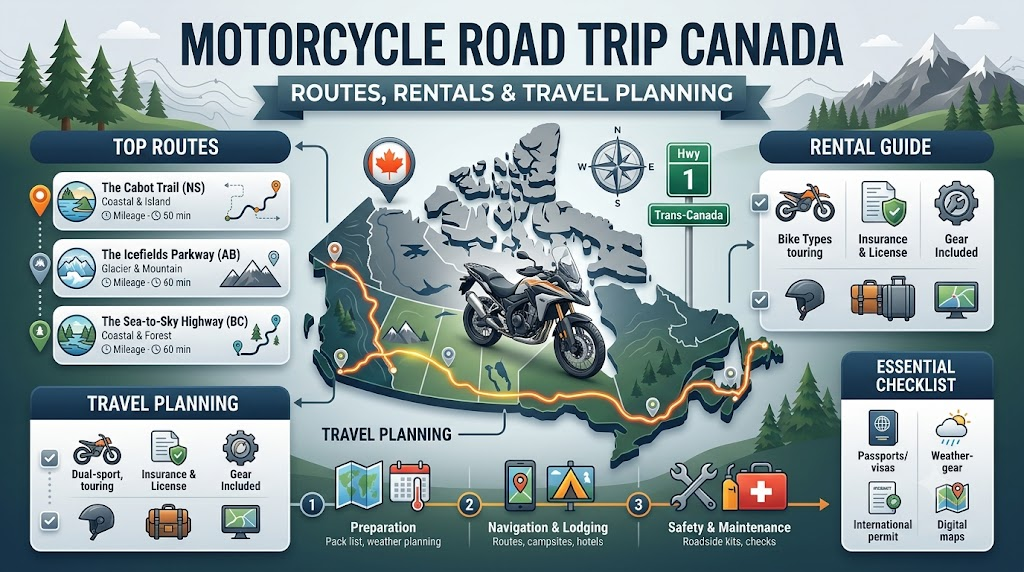
Introduction
How long is a road that crosses a whole country? The Trans-Canada Highway runs about 7,800 kilometers. It goes from coast to coast. That is a lot of pine trees, wide sky, and mountain air.
Canada is huge. Its roads reward slow trips. You can pass a glacier lake at dawn. You can eat lunch by a calm river. By night, you may spot an elk by the road.
Many guests want that freedom on two wheels. Motorcycle rental Canada services make it easy. You can even fly in with just one bag.
But the right ride matters. Distance, weather, and skill all change your pick. This guide helps you choose, step by step.
MotoShare is a trusted Canadian site for rental rides. We name it where it helps. The main focus stays on your road.
Why Rent a Motorcycle in Canada?
Canada makes riding feel big. The road opens up. The sky opens up with it. Long, smooth stretches let you relax. Scenic roads add bends, lakes, and tall mountain walls.
Mountain roads bring switchbacks. A switchback is a sharp zigzag turn on a steep hill. It takes focus. But it feels great on a bike.
Wildlife is part of the ride. Elk, deer, bears, and moose live near many roads. Slow down when you see one. Never feed an animal. Stay far back. Let it move on its own.
The season matters a lot. Summer gives warm days. Spring and fall bring cold, wet days. Snow can fall in the hills early.
Engine size matters too. A light bike suits city streets. A touring cruiser suits long highway days. An adventure bike suits gravel roads. Start with the trip you want. Then pick the bike.
When you rent a motorcycle in Canada, pick the type that fits your skill and the season.
Choosing Your Ride: Cruisers, Touring Bikes, and Cars
Canada is wide. Trips grow long fast. A ride from one town to the next can take hours. So your ride must feel good for a long time. Think about comfort, bags, and wind. The table below shows four common picks. Read each row before you book. It will make your choice much easier.
| Vehicle Type | Best Use | Rider Skill Needed | Luggage Space | Road Comfort |
|---|---|---|---|---|
| City Commuter Bike | Short city trips | Beginner | Small: a backpack | Fine in town, tiring on long roads |
| Touring Cruiser | Long highway days | Medium | Good: side bags | Very easy on the body |
| Adventure Motorcycle | Gravel and hill roads | Medium to expert | Good: side cases | Strong on rough roads |
| Rental Car / SUV | Families, cold, rain, big bags | Any driver | Large: full trunk | Best in rain and cold |
Wind is a big deal on open highways. Heavy cruisers can feel pushed on the Prairies. Tall adventure bikes catch even more wind. Hold the bars firm and stay calm.
Check bag and trunk space before you book. Winter coats and camp gear take room. Also think about comfort. A good seat and a windshield make a long day easy.
Motorcycle Rental Toronto and Motorcycle Rental Calgary
Toronto sits on the shore of Lake Ontario. A motorcycle rental Toronto gives you fast access to lake roads and farm roads. The city has busy highways, like the 401 and the QEW. Traffic can be thick. Leave early. Pick a calm weekday for your first ride.
Past the city, roads get quiet. South Ontario has farms, small towns, and lake views. These make great day rides. Watch for rain. Lake weather can shift fast.
Calgary feels very different. The city sits on the plains. The Rocky Mountains rise to the west. A motorcycle rental Calgary puts you about 90 minutes from Banff. The road climbs fast. The air gets cool as you go.
Wind can be strong in Alberta. Wear layers you can add or remove.
Fill your tank before you head to the hills. Gas stops get rare past the main towns. Check the park rules too. You need a Parks Canada pass to stop in parks like Banff.
Both cities suit riders. Toronto fits short trips and lake rides. Calgary fits hill trips. Each city gives a different kind of fun. Think about the roads you love most. Then pick the one that fits your plan.
Motorcycle Rental Vancouver and Scenic Coastal Rides
Vancouver has a mild coast climate. Winters are soft next to most of Canada. Summers feel nice. That makes it an easy place to rent a motorcycle in Canada. A motorcycle rental Vancouver can start your trip right in the city.
The Sea-to-Sky Highway is the star ride. It runs from Vancouver to Whistler. The road hugs Howe Sound, a long inlet of the sea. Then it climbs into the mountains. The trip is about 120 kilometers. With stops, it takes two hours or more.
Pull over at the viewpoints. Take photos only when you stop safely. The road has bends and steady cars. Stay focused.
Coast weather brings fog and light rain. Wet roads get slick. Painted lines are the worst. Brake early. Brake with a soft touch.
You can also take a ferry to Vancouver Island. The island has quiet roads and forest views. Book your ferry spot early in summer. Lines can be long. Ask your host if the bike can ride on the ferry. Always check first.
Adventure Motorcycle Rental Canada
An adventure bike is built for mixed roads. It has tall suspension. That is the part that soaks up bumps. Its tires work on pavement and gravel. You sit upright, which feels good on long days. The bike sits high, so rocks miss the engine.
Adventure motorcycle rental Canada suits riders who want more than paved roads. Canada has gravel logging roads, forest tracks, and park trails. Logging roads are work roads for big trucks. Share them with care. Keep right. Slow down at blind turns.
Mountain weather shifts fast. A warm valley can turn cold up high. Pack layers, gloves, and a rain shell.
Wildlife needs your eyes. Moose, deer, and bears roam the woods. Ride slower at dawn and dusk. Scan the roadside as you go.
Know your skill. A tall bike feels heavy on loose gravel. If dirt roads are new to you, pick a light bike. Try easy gravel first. Save the steep and deep parts for later. Take your time. There is no prize for speed.
Pre-Ride Vehicle Inspection Checklist
Check the ride before you leave. It takes about ten minutes. It saves time and stress later. Walk around the bike or car. Touch each part and test it. Take photos with your phone.
Use the table below as your guide. If something looks wrong, tell the host right away. Do not rush this step.
| Check Point | What to Look For | Why It Matters |
|---|---|---|
| Tires & Tread Depth | Even tread, no cracks, no nails, right air | Good tires grip wet and cold roads |
| Front & Rear Brakes | Firm levers or pedals, smooth stops | Hill descents need strong brakes |
| Headlight & Turn Signals | All lights and signals work | Others must see you in rain and fog |
| Engine Oil & Fluid Levels | Oil and coolant in range, no leaks | Low fluids can stop the engine |
| Provincial Registration & Insurance Papers | Valid permit and proof of cover that match the plate | Police may ask, and you need them after a crash |
| Mirrors & Throttle Cable | Tight mirrors; throttle snaps back when you let go | You need a clear view and full speed control |
A good handover is a short, clear talk. Ask the host to show you the controls. Learn where the switches and the fuel cap are. Ask about the deductible. That is the sum you pay first if damage happens.
Confirm the return time and place. Take final photos at the end too. These steps protect you and the host.
Motorcycle Road Trip Canada and Seasonal Route Planning
A motorcycle road trip Canada can feel epic. But it needs a good plan. Start with the season. Canada has a short riding window. For many routes, June to September works best. Mountain roads may open late. They may close early.
Cold can come fast. High passes can drop below freezing, even in July. Pack warm layers. Check the forecast each morning.
Plan each day with care. Distances look short on a map. They take long on the road. Aim for six or seven hours of riding at most. Add time for fuel, food, and rest. Take a short break every two hours. Tired riders make mistakes. Start early each day.
Keep your tank at least half full in remote spots. Gas stops can sit far apart. Pack snacks and water too.
Park rules matter too. Banff, Jasper, and other national parks need a Parks Canada pass if you stop inside. Buy it early. Keep it with your papers.
Book rooms early in summer. Popular towns fill up fast. Last, share your route with a friend. In remote spots, someone should know where you are.
Car Rental Canada and Car Rental Toronto
Two wheels are not always best. Sometimes four wheels fit better. Canada has big weather swings. A car can shield you from them.
Shoulder season is a good case. That means spring and fall, the months between summer and winter. Rain, wind, and cold are common then. A car keeps you dry and warm.
Families often need cars too. Kids need room and comfort. Winter coats and bags take space. Long cross-country trips need big trunks. An SUV gives extra room and a high seat.
All-wheel drive helps on slick or snowy roads. Quebec requires winter tires in winter months. Ask about them if you travel then.
Car rental Canada options include small cars, SUVs, and vans. For city trips, car rental Toronto is easy to set up. You can use it for Niagara, Prince Edward County, or Algonquin Park. Parking in downtown Toronto can cost a lot. Plan ahead.
Mixing rides is smart too. Take a bike on sunny days. Switch to a car for a wet week.
Finding Local Rides and Booking Through MotoShare
MotoShare is an online marketplace focused on Canada. It links guests with verified local rental providers in major provinces. You can search by city and by ride type.
Say you type motorcycle rental near me. You see choices close to you. That saves travel time. It makes pickup easy. You can also search a city before you fly in.
Prices show in CAD, the Canadian dollar. Compare daily rates across listings. Read what each price includes. It may list a helmet, cover, or mileage limits.
Each listing shows clear specs. You see the model, the engine size, and the bike type. That helps you match a bike to your skill and route.
Take your time with each listing. Ask hosts questions before you book. Local hosts know local roads. Ask them for route tips. Then do your own checks at pickup. A good site gives you a strong start. Your care on the road does the rest.
Real-Life Travel Scenarios
- A weekend in Prince Edward County: A local rider in Toronto books a cruiser for the weekend. He rides east to Prince Edward County. It is about three hours away. He enjoys quiet farm roads, lake views, and small-town cafés. He starts early to skip the 401 traffic. He returns the bike before dark.
- The Icefields Parkway: An adventure rider rents a 750cc dual-sport bike in Calgary. She rides west to Banff. Then she follows the Icefields Parkway to Jasper. She buys a park pass first. She packs layers, since the weather shifts fast. She fills her tank often.
- Vancouver Island by touring bike: A visitor from Europe lands in Vancouver and rents a touring bike. She takes the ferry to Vancouver Island. Then she rides the Pacific Rim Highway toward the coast. She loves the sea air and old forests. She packs rain gear for sudden showers.
- The Laurentians in fall: A family of four books an all-wheel-drive SUV in Montreal. They tour the Laurentian Mountains in autumn. The SUV holds bags and coats with ease. They stop often for lakes, small towns, and bright fall leaves. They book rooms ahead.
Common Mistakes to Avoid When Renting Vehicles in Canada
- Underestimating gaps between fuel stops: Rural areas can have long gaps between gas stops. Running dry in the Prairies or the Rockies is stressful. Check the map. Fill up at every chance. Keep your tank at least half full.
- Forgetting that passes can freeze in July: High passes can drop below freezing, even in mid-July. Cold hands and wet clothes hurt your control. Pack warm layers, thick gloves, and a rain shell. Check the forecast each morning.
- Not checking your license class: Each province sets its own license classes. A learner or restricted license may not allow rentals. Check your class, like Ontario M or BC Class 6, before you book. Ask the host which license they accept.
- Riding at dusk or dawn near forests: Moose, deer, and elk move most at dawn and dusk. Thick woods hide them until the last second. A crash can be deadly. Slow down then. Scan the roadside. Avoid riding at night.
- Skipping layers and rain gear: Canada’s weather swings fast from sun to cold rain. Wet, windy riding drains your energy. Pack windproof and waterproof gear. Add a warm base layer. Keep it close, not at the bottom of your bag.
- Renting a heavy cruiser without wind skill: Crosswinds hit you from the side. They push heavy cruisers around. A new rider may tense up and lose control. Pick a bike you can handle. Practice on calm roads first.
- Ignoring national park passes: Many hill routes cross national parks. You need a Parks Canada pass if you stop inside. A fine can ruin your day. Buy the pass early. Keep it with your rental papers.
- Relying only on mobile data: Remote valleys often have no cell signal. A blank map can leave you lost. Save offline maps before you leave town. Also carry a paper map and a power bank.
Simple Rental Booking Checklist
- Valid unrestricted motorcycle license: An unrestricted license has no learner limits. Bring your home license. Visitors should bring a passport too.
- Major credit card for the deposit: A pre-authorization is a hold on your card. The bank sets money aside but does not spend it. Ask the sum and the release date.
- Proof of insurance and clear deductible terms: Insurance is a must. Ask what it covers. Ask about your deductible. That is the sum you pay first if damage happens.
- DOT or ECE certified helmet check: DOT and ECE are safety labels. Find one inside the helmet. Check the strap, the fit, and the shell for cracks.
- Fuel return policy and drop-off schedule: Full-to-full means you return the tank full. Confirm the return time and place in writing.
Frequently Asked Questions
1. Can international visitors rent a motorcycle in Canada using their foreign driver’s license?
Often yes, for a short visit. Most provinces let visitors use a valid foreign license for a short time. The license must cover motorcycles. If it is not in English or French, bring an International Driving Permit. It is a paper that translates your license.
Also carry your passport. Each province has its own rules. Check with your host before you book.
2. What months are best for planning a motorcycle road trip across Canada?
June to September works best for most routes. Days are long and warm. Hill roads are usually open. July and August are the busiest months. June and September bring fewer crowds. But nights can be cold.
Spring and fall can bring snow in the hills. The coast near Vancouver stays mild longer. Always check road reports and the forecast before you leave.
3. Are motorcycle helmets legally required in every Canadian province?
Yes. Every Canadian province and territory has helmet laws for riders. Passengers must wear one too. Rules also cover helmet type. Look for a DOT or ECE label inside the helmet.
A good helmet fits snug and has no cracks. Many hosts include one. Ask before you book. Also ask about a second helmet for a passenger.
4. What type of insurance is mandatory when renting a motorcycle or car in Canada?
Third-party liability insurance is a must for all vehicles in Canada. It pays for harm you cause to other people or their things. Some provinces, like British Columbia and Quebec, run public car insurance.
Hosts often include basic cover. Limits and deductibles vary. A deductible is the sum you pay first if a claim happens. Ask what the policy covers. Ask about damage to the rental too.
5. Can beginner riders rent high-powered sport or touring bikes?
Often not. Many hosts keep strong sport and touring bikes for skilled riders. A big bike can be hard for a beginner. Learner licenses also have limits.
Start with a light, small bike. Practice in calm places first. Be honest with the host about your skill. They will help you pick a safe match. As you grow, you can rent a bigger bike on a later trip.
6. How does MotoShare help riders find a reliable motorcycle rental near me?
MotoShare is a marketplace focused on Canada. Type motorcycle rental near me to see choices close to you. Then compare listings from verified local providers. Each listing shows clear specs and daily rates in CAD.
This helps you pick a bike for your skill and route. You can also ask hosts questions before you book. That saves time and cuts surprises.
7. Are one-way rentals possible between major Canadian cities like Calgary and Vancouver?
Sometimes. Some hosts allow one-way rentals. Many do not. The trip from Calgary to Vancouver is long. It is close to 1,000 kilometers. Hosts may charge a drop-off fee.
Ask before you book. Confirm the fee, the return spot, and the time in writing. If a one-way trip is not possible, plan a loop. End where you start.
8. Do Canadian rental motorcycles include roadside assistance for remote highway breakdowns?
It depends on the host. Some rentals include roadside help. Some do not. On remote highways, help can take hours. Ask if roadside help is included. Ask which number to call.
Save that number in your phone. Cell signal may fail, so write it down too. Carry a basic tool kit and a tire repair kit. Share your route with someone.
9. What should riders pack to handle rapid mountain weather changes?
Pack in layers. Start with a warm base layer. Add a warm middle layer. Top it with a windproof, waterproof shell. Layers let you adjust as the weather shifts.
Bring warm gloves, a neck warmer, and rain boots or boot covers. Keep a spare dry pair of gloves. Add sunscreen and sunglasses for the bright sun up high. Pack water, snacks, and a small first aid kit.
10. Can I rent a car instead of a motorcycle on MotoShare if the weather turns cold?
Yes, you can often switch. On MotoShare, you can search for cars as well as bikes. If cold or heavy rain arrives, compare car choices near you. A car gives warmth, dry seats, and more room.
Check the host’s change rules first. Some bookings are flexible. Some are not. Mountain weather can change plans fast. So plan a backup before bad weather hits.
11. What security deposit amounts do Canadian rental hosts typically hold?
Deposits vary by host and by ride. A small city bike needs a lower deposit. A big touring bike or an SUV often needs more. Most hosts place a hold on a major credit card.
The hold lifts after you return the ride in good shape. Ask for the exact sum and the release time before you book. Keep your return photos as proof.
12. Why should travelers book through a specialized Canadian rental marketplace?
A Canada-focused marketplace lists rides in cities across major provinces. Prices show in CAD, so you skip money math. You compare verified providers in one place. Clear specs help you choose.
This saves time and cuts confusion. Local providers also know local roads. Ask them for route tips. You still must check the papers and the ride at pickup. But a strong start makes the whole trip calm.
Conclusion
Canada rewards riders who plan well. Match your ride to the route first. Then think about the season, your bags, and your skill. A commuter bike suits city streets. A touring cruiser handles long highway days. An adventure bike handles gravel and hill roads. A car or SUV keeps families warm and dry. Check the ride and the papers before you go. Pack warm layers. Save offline maps. Keep your tank half full. MotoShare can help you compare verified options across the country. Now pick your ride, pick your route, and set out. Slow down at dawn and dusk. The best miles are the ones you take with care. Respect Canada’s wildlife and enjoy the open highway.