Introduction
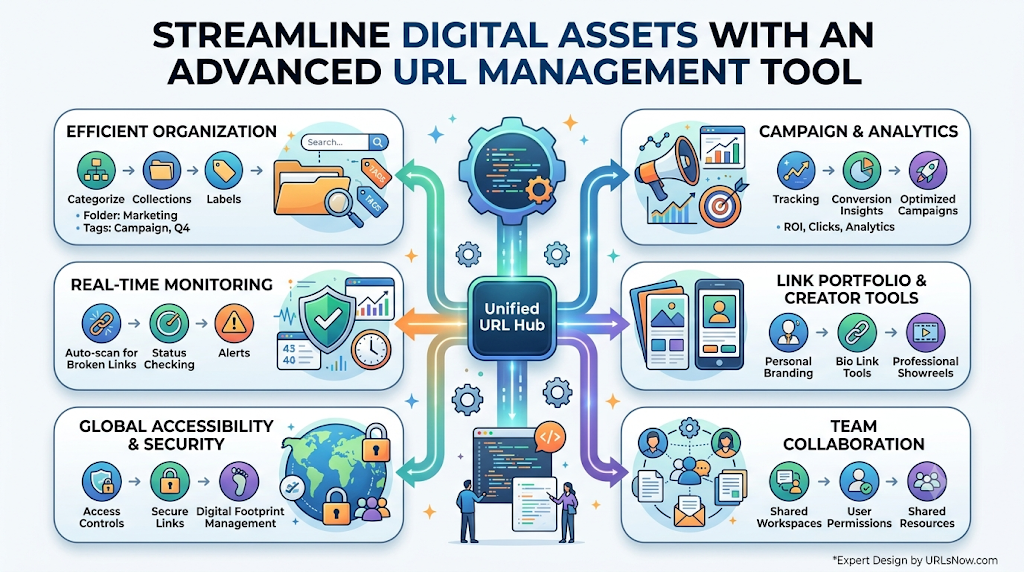
As personal brands, agencies, and businesses expand their digital presence across multiple social networks, publishing platforms, and marketing channels, keeping track of web links becomes a complex operational challenge. Scattered spreadsheets, lost bookmark lists, and broken links disrupt workflows and damage customer trust. Utilizing a dedicated URL management tool provides a systematic approach to storing, categorizing, and auditing every web link in your digital footprint. When organizations fail to monitor their web assets, dead links harm search engine performance while lost landing pages waste valuable ad spend. Operating through a centralized platform like URLsNow solves these challenges by providing a single dashboard to organize campaigns, create custom bio pages, and run continuous link checks.
What Is a URL Management Tool?
Definition
A URL management tool is a software solution designed to help individuals, marketers, and organizations store, categorize, monitor, and distribute web addresses from a single web dashboard.
How URL Management Works
Rather than storing links across browser bookmarks, private chat channels, or loose text files, link platforms process web addresses through structured databases. Users import or save web links, tag them according to campaigns or topics, and organize them into searchable collections. Advanced engines actively ping saved web addresses to confirm server availability and response speeds.
Why Link Organization Matters
When web assets are poorly documented, team members lose productive hours hunting for active landing page links, product assets, and documentation hubs. Structured organization ensures every digital touchpoint remains accessible and fully updated across departments.
Benefits of Centralized URL Management
Using a unified link management platform eliminates operational redundancy, reduces link downtime, streamlines team onboarding, and protects brand consistency across external marketing touchpoints.
Why Link Management Is Important
Effective link control forms the backbone of modern web architecture and content marketing.
- Better Organization: Group resources by project, campaign, client, or publishing medium.
- Improved Productivity: Retrieve essential marketing, design, and developer links in seconds.
- Easier Collaboration: Share curated link collections securely with internal team members and external stakeholders.
- Better User Experience: Guarantee that prospects, customers, and readers always arrive at active, relevant web pages.
- Stronger SEO Performance: Eliminate dead ends and redirects that harm search engine crawlability.
- Consistent Brand Presence: Maintain uniform URL formatting and branding across social networks and campaign touchpoints.
Web development standards established by the W3C emphasize the importance of persistent URIs to preserve long-term web usability.
Essential Features of a Modern Link Management Platform
Modern web environments require intelligent link handling capabilities that extend beyond basic browser bookmarking.
URL Organization & Structure
A robust URL organizer tool structures web links using custom folder hierarchies, nested collections, and flexible workspace views tailored to dynamic workflows.
Tagging & Categorization
Meta tags allow users to filter links across multiple parameters, such as content formats, publishing dates, ownership teams, or marketing channels.
+--------------------------------------------------------------------------+
|                          CENTRALIZED LINK DASHBOARD                      |
+--------------------------------------------------------------------------+
|  [ Collection: Q3 Marketing ]  |  [ Tag: #LandingPages ]  |  [ Active ]  |
|  - https://example.com/promo1  --> Status: 200 OK (Verified)             |
|  - https://example.com/demo    --> Status: 404 Not Found (Alert Flagged) |
+--------------------------------------------------------------------------+
|  Action: Auto-notify owner -> Replace broken link -> Update Bio Profile  |
+--------------------------------------------------------------------------+
Search & Filtering
Fast search capabilities ensure users locate specific landing pages or digital assets instantly by querying domains, keywords, tags, or creation dates.
Sharing & Team Access
Granular permission settings enable administrators to grant view-only, edit, or managerial rights to specific team members or client accounts.
Automatic Broken Link Monitoring
Why Broken Links Matter
Over time, web pages move, site architectures undergo updates, and external domains expire. These natural structural shifts produce dead ends, commonly known as 404 errors.
SEO Impact & User Experience
According to technical documentation from Google Search Central, encountering repeated broken links causes poor user experiences and signals neglected web infrastructure. Continuous automatic broken link monitoring acts as an early warning network, flagging response errors before they hurt search visibility.
Proactive URL Health Tracking
By deploying a continuous URL health monitoring tool, webmasters receive automated alerts whenever a saved link returns a server error, timeout, or unexpected redirect, enabling immediate remediation.
Campaign Link Management for Marketers
Marketers handle hundreds of custom promotional links across paid search, influencer sponsorships, email newsletters, and affiliate networks.
- Landing Page Tracking: Ensure promotional destinations remain live during peak advertising windows.
- Multi-Channel Attribution: Organize specialized tracking links cleanly across social networks, paid media, and partner publications.
- Affiliate Asset Control: Keep partner links organized to verify proper redirection and payout tracking.
Using a specialized campaign link management tool ensures marketing teams maintain total visibility over their seasonal conversion funnels and promo links.
Link Portfolio Management for Professionals
Freelancers, agency leaders, and independent consultants require professional methods to present their published work and past achievements.
Through systematic link portfolio management, professionals showcase:
- Published research, news features, and industry articles
- Client case studies and visual design projects
- Hosted webinars, podcast appearances, and conference presentations
- Verified professional certifications and directory profiles
Curating a clean portfolio link collection builds trust with potential employers, clients, and partners.
Free Link in Bio Tool for Creators
Social media platforms frequently restrict users to a single profile link. Creators rely on a free link in bio tool to build mobile-friendly micro-landing pages that direct followers to various external channels.
+------------------------------------------------------+
|               CREATOR LINK IN BIO PROFILE            |
+------------------------------------------------------+
|  [ Avatar / Profile Photo ]                          |
|  @ContentCreator - Official Links                    |
|                                                      |
|  [ Watch Latest YouTube Video                     ]  |
|  [ Read New Blog Article                          ]  |
|  [ Join Newsletter Community                      ]  |
|  [ Shop Product Store                             ]  |
+------------------------------------------------------+
|  Powered by Centralized Link Management Platform     |
+------------------------------------------------------+
Centralizing social links inside a dynamic profile allows creators to update destinations instantly without editing individual social channel bio settings.
Content Link Management for Bloggers & Publishers
Content producers manage large web structures containing hundreds of historical articles, internal cross-references, and external research citations.
Utilizing a dedicated content link management tool allows bloggers to:
- Index published articles across topic clusters
- Track external reference URLs cited within editorial posts
- Identify and update outdated affiliate or product recommendations
- Maintain editorial standards during site migrations or domain rebrands
Proper editorial link tracking preserves domain equity and extends the operational lifetime of evergreen web guides.
Digital Footprint Management
An individual’s or business’s digital footprint consists of every public web page, social profile, press release, and directory entry connected to their brand.
Leveraging a digital footprint management tool provides clear visibility into your public presence. By organizing and auditing brand-owned web addresses, businesses maintain complete control over public information, enforce consistent brand messaging, and remove outdated digital assets.
URL Management Capabilities Comparison
| Feature Category | Basic Bookmarks | Spreadsheet Tracking | Dedicated URL Management Tool |
| Centralized Access | Browser Specific | Manual Cloud Access | Universal Cloud Dashboard |
| Health Monitoring | Manual Clicking | None | Automated Server Checks |
| Team Collaboration | Difficult Exporting | Concurrent Edit Risks | Role-Based Permissions |
| Campaign Tracking | Static Text Notes | Complex Formula Rows | Organized Tagging & Analytics |
| Public Showcasing | Not Supported | Not Supported | Dynamic Portfolios & Bio Pages |
URLsNow for Different User Types
Bloggers
Bloggers catalog published articles, monitor outbound affiliate links, and maintain clean internal reference structures.
Content Creators
Creators manage multi-platform profile links, build responsive link-in-bio hubs, and organize brand deal assets.
Digital Marketers
Marketers track multi-channel ad URLs, organize promotional campaign links, and prevent broken landing page links during live ad spend.
Businesses
Companies centralize internal operational links, manage employee training portal directories, and protect brand identity across public web profiles.
Agencies
Agencies organize client digital assets into segregated workspaces, present clean project portfolios, and deliver link audit reports.
Developers
Engineers catalog API documentation hubs, staging environment URLs, code repositories, and technical reference pages.
Freelancers
Solopreneurs present curated work portfolios to prospective clients and organize client project delivery hubs.
Students & Educators
Academics collect research citations, organize course syllabus resources, and share curated study materials.
Best Practices for Managing URLs Effectively
- Categorize by Workflow: Group links logically by department, campaign type, or content category rather than storing everything in a single list.
- Automate Broken Link Alerts: Configure automated server checks to catch inactive domain pages early.
- Establish Naming Conventions: Standardize collection titles and tags across teams to maintain searchable workspaces.
- Audit Assets Regularly: Conduct quarterly link audits to remove deprecated links and consolidate redundant destinations.
- Protect Privacy & Permissions: Restrict sensitive administrative link collections using role-based access settings.
- Maintain Canonical Consistency: Verify that saved destination URLs use secure HTTP protocols and correct canonical structures as outlined by web standards on Mozilla Developer Network (MDN).
Common URL Management Mistakes
- Relying on Fragmented Spreadsheets: Static spreadsheets quickly become outdated and lack automated health monitoring.
- Ignoring Redirect Loops: Failing to audit redirected URLs causes page delay issues and frustrates site visitors.
- Allowing Dead Links in Live Ads: Running paid traffic to unmonitored landing pages results in wasted advertising budgets.
- Neglecting Mobile Optimization: Using unoptimized bio link pages turns away mobile social media traffic.
- Failing to Archive Outdated Projects: Keeping obsolete campaign links active creates operational confusion among team members.
The Future of URL Management
As digital publishing platforms proliferate, link management continues to evolve beyond simple web address storage.
Key industry trends shaping link workflows include:
- Automated Asset Discovery: Intelligent engines automatically index and tag newly generated brand URLs.
- Real-Time Health Verification: Instant API pings identify domain downtime, page redirects, and broken scripts in seconds.
- Unified Workspace Ecosystems: Deep integrations between link management platforms, social scheduling platforms, and marketing suites streamline digital publishing workflows.
How URLsNow Helps Users Stay Organized
Managing digital assets across multiple platforms requires reliable infrastructure. URLsNow serves as a complete link organization hub, bringing structure and visibility to your digital footprint.
Through its centralized dashboard, users can organize web links into custom collections, enable automated broken link checks, create dynamic bio link pages, and showcase curated work portfolios. By replacing loose browser bookmarks and manual spreadsheets with automated monitoring tools, URLsNow simplifies digital asset control for creators, marketers, and enterprises alike.
Frequently Asked Questions (FAQ)
What is a URL management tool?
A URL management tool is a specialized software application that helps users save, categorize, organize, and monitor web links from a centralized dashboard. It replaces scattered browser bookmarks and manual spreadsheets with structured collections, automated health checks, and team sharing capabilities.
Why is link management important?
Link management is essential because disorganized or broken links cause poor user experiences, waste marketing spend, and harm search engine rankings. Centralizing links improves team productivity, protects brand reputation, and guarantees that audiences always reach active web pages.
How does broken link monitoring work?
Broken link monitoring tools continuously test saved web addresses by sending automated HTTP requests to destination servers. If a server returns an error code like 404 Not Found or experiences a connection timeout, the platform alerts the user so the link can be repaired.
What is URL health monitoring?
URL health monitoring involves tracking the operational performance, response speeds, redirect chains, and security statuses of web addresses. Regular monitoring ensures that landing pages, campaign links, and digital resources remain fully functional for end users.
What is a link portfolio?
A link portfolio is a curated digital showcase that organizes an individual’s or company’s web assets—such as published articles, case studies, project repositories, and media mentions—into a professional, easily shareable webpage.
How does a link in bio tool help creators?
A link in bio tool provides a single mobile-friendly landing page containing multiple links. Creators place this single URL in social media profiles, allowing followers to easily access their blog, online store, videos, and secondary channels.
Why should businesses organize URLs?
Businesses manage hundreds of digital assets across departments. Organizing URLs prevents data loss, improves cross-team collaboration, streamlines client onboarding, and protects brand messaging by ensuring employees use verified, up-to-date web addresses.
Can URL management improve SEO?
Yes, systematic URL management supports SEO by helping webmasters identify and fix broken links, manage redirect chains, preserve link equity, and ensure search engines can crawl site assets without encountering dead ends.
Who should use URLsNow?
URLsNow is designed for bloggers, content creators, digital marketers, marketing agencies, software developers, freelancers, and businesses looking to centralize their link organization, monitor link health, and manage digital campaign assets efficiently.
How often should links be audited?
Organizations should audit critical campaign and sales landing page links continuously using automated monitoring tools. Broader digital portfolios and content resource archives should undergo systematic manual reviews at least once every quarter.
Conclusion
Adopting a modern URL management tool is a fundamental requirement for anyone building and maintaining an online presence. Centralizing web addresses into structured collections eliminates digital clutter, saves valuable team hours, and prevents the customer frustration caused by broken web links. By combining organized workspace collections, continuous link health monitoring, dynamic bio profiles, and campaign tracking into a unified workflow, platforms like URLsNow ensure your digital assets remain secure, searchable, and fully functional. Investing in systematic link organization today protects your brand equity, optimizes marketing campaign performance, and supports long-term digital growth.